A GRP flat roof, short for glass reinforced plastic and often called fibreglass, is a seamless, hard-wearing roof laid in place as a liquid and left to set. It is one of the most popular systems for extensions, dormers, garages and awkward roof shapes in South Wales. Here is how it is built and what it can and cannot do.
What is a GRP roof?
GRP roofing is made from layers of glass fibre matting soaked in resin, then covered with a topcoat. It is applied on site over a prepared deck, so it forms one continuous surface with no joins. Once cured, it is tough, waterproof and light.
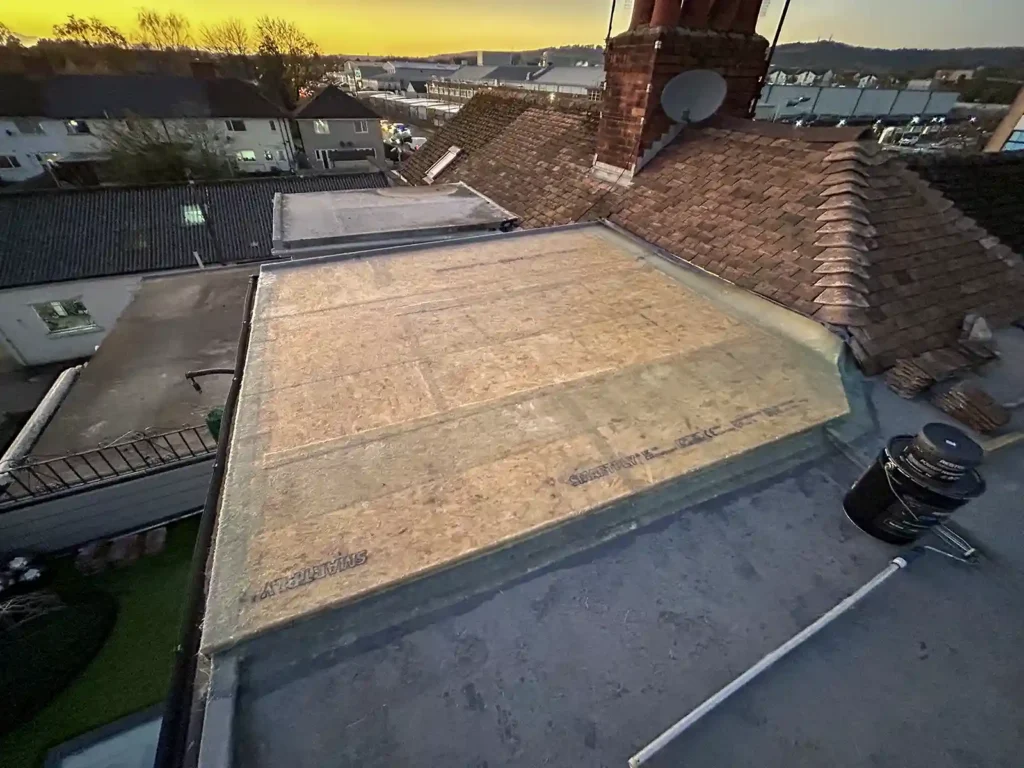
How a GRP roof is laid
- Deck: a sound, dry, well-fixed deck is essential. Rotten boards are replaced and falls are checked
- Edge trims: a drip edge or trim is fitted around the roof to carry water into the gutter
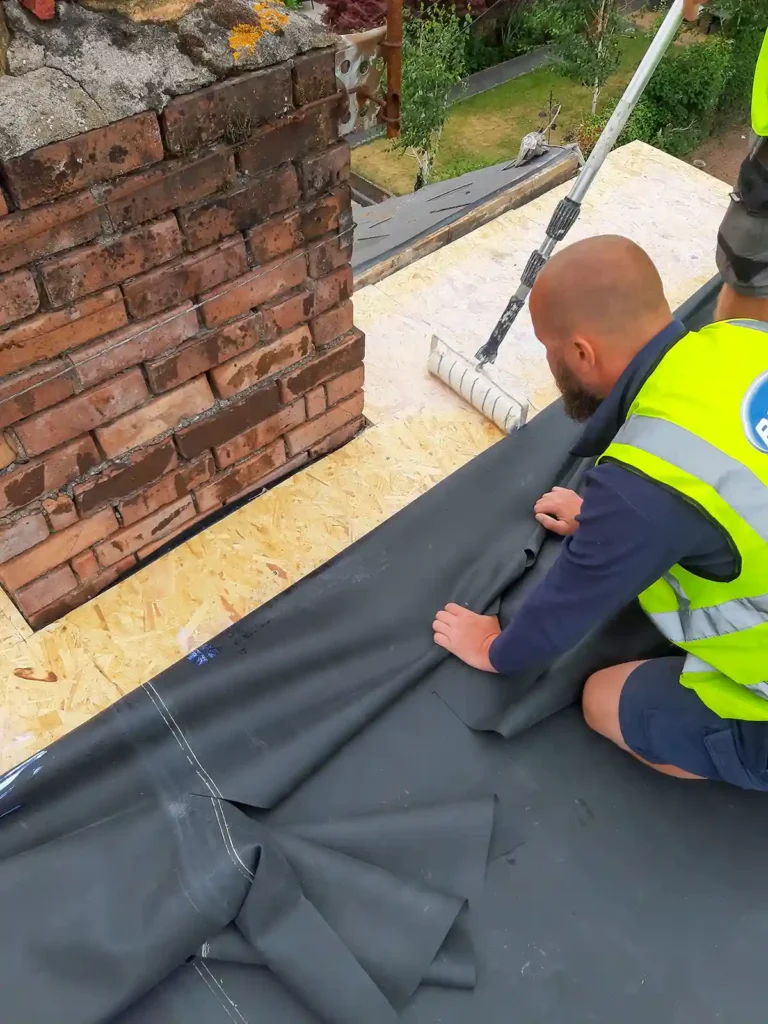
- Laminate: resin and glass fibre matting are laid over the deck and rolled to remove air
- Details: upstands, corners and rooflight edges are formed in the same material
- Topcoat: a final coloured coat protects the laminate and gives the finish
- Curing: the roof needs dry conditions while it sets, which is why weather matters
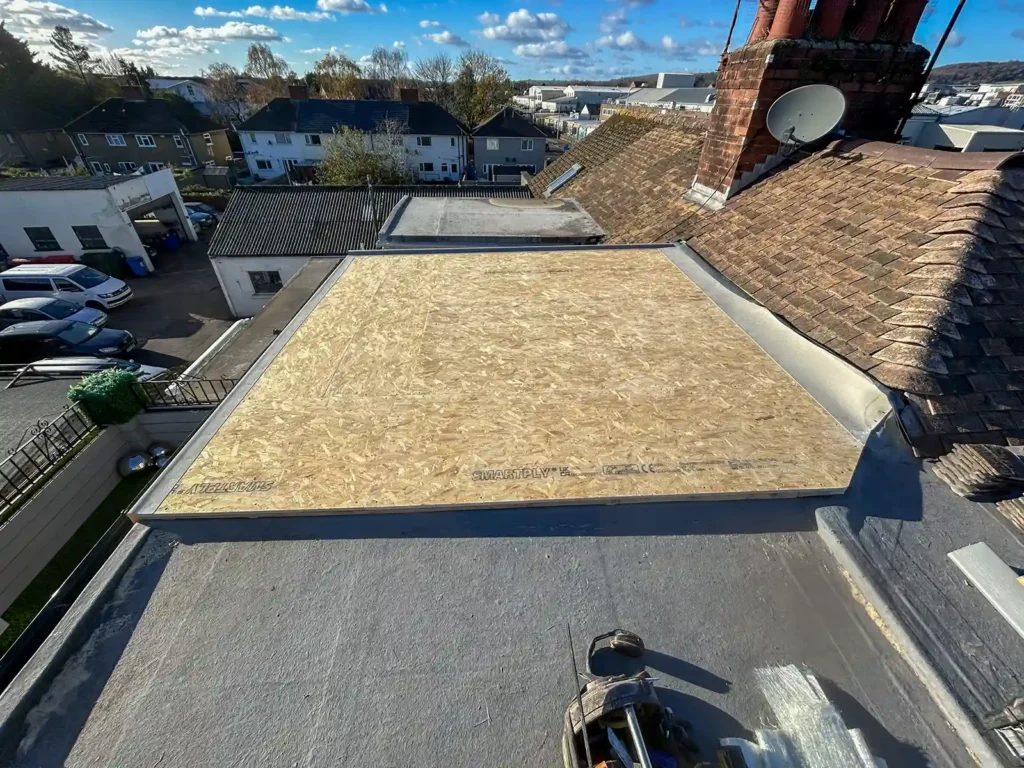
Advantages of GRP
- Seamless, with no joints to open up
- Strong enough to take light foot traffic
- Works well on roofs with awkward shapes, curves and many details
- Quick to lay once the deck is ready
- Can be coloured with the topcoat
- Suitable for new roofs and replacements of worn-out felt
Limits to know about
- The deck must be firm and stable: movement can crack the laminate
- It needs dry, mild weather to be laid properly
- It is a specialist job: poor mixing or damp decks cause problems later
- Damage from impacts or building movement can crack it, though small cracks can often be repaired
A good roofer will check the deck and the falls first. Fitting GRP over a damp or rotten deck is one of the most common reasons it fails early.
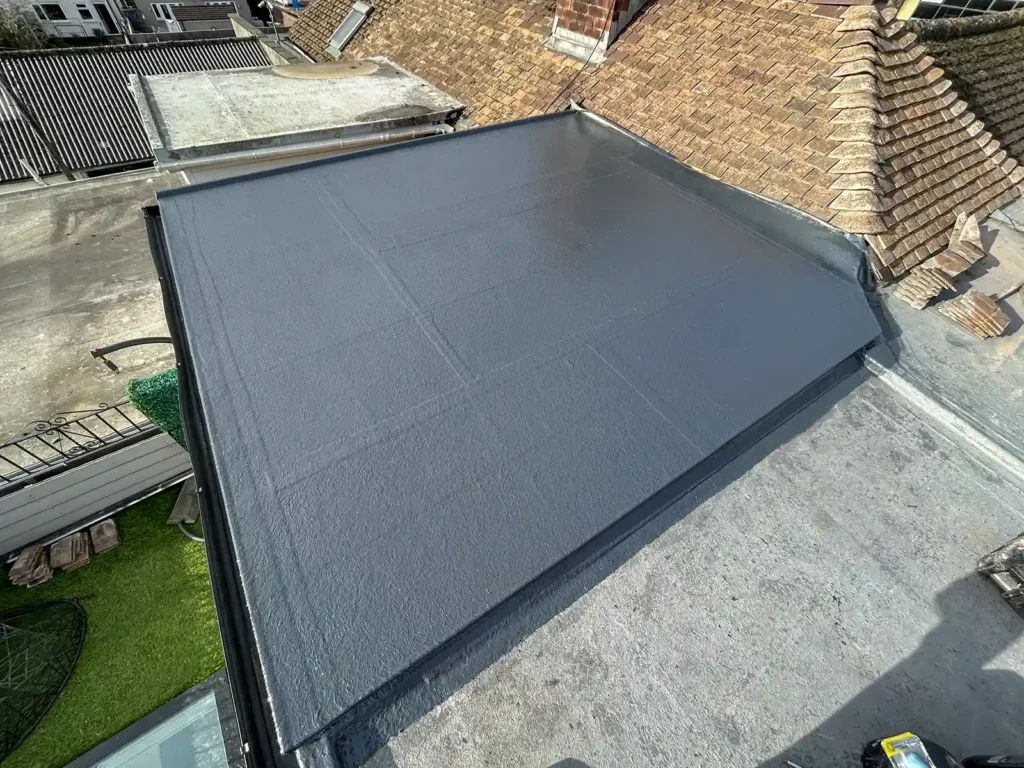
GRP repairs
Small cracks, damaged edges and worn topcoats can often be repaired by cleaning the area, laying new laminate and re-coating, which is usually cheaper than replacing the roof. If the cracks are widespread, or the deck beneath has failed, a new roof is the better answer.
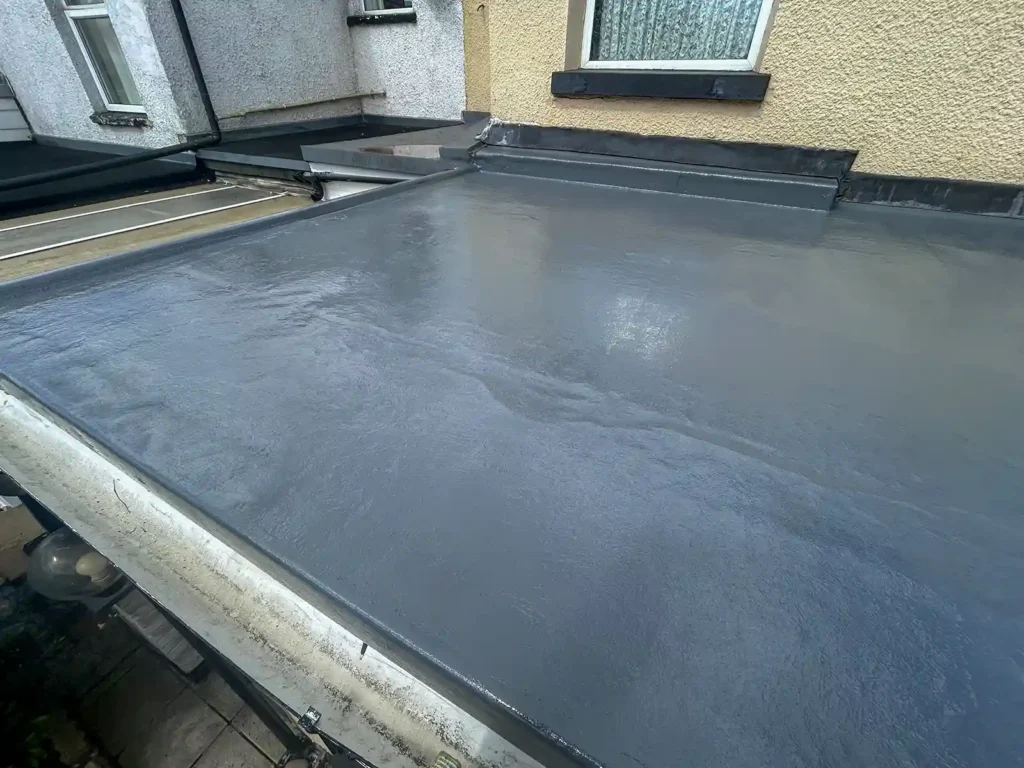
Questions to ask your roofer
- Will the deck be replaced or only repaired?
- What edge trims and falls will you use?
- What resin and topcoat system is being used?
- How will the weather be managed during the job?
- What guarantee comes with the work?
Is GRP right for your roof?
GRP is a strong choice for small and medium roofs with plenty of detail. For large roofs, or where the structure moves a lot, other systems such as single-ply or EPDM may suit better. We can survey the roof, explain your options and give you a fixed price in writing. See our roof replacement and roof repairs pages, or contact us.
How long does a GRP roof last?
There is no single figure, because the lifespan depends on the quality of the materials, the deck, the installation and how the roof is looked after. A well-laid GRP roof can give many years of service, but a roof laid over a damp or moving deck can fail early. Ask your roofer what guarantee comes with the roof, and read the terms.
Looking after a GRP roof
- Keep the surface clear of leaves, moss and debris
- Check edges, trims and upstands after storms
- Avoid sharp objects and heavy loads on the surface
- Have small cracks repaired promptly before water gets in
- Have the roof inspected once a year
Gutters matter too. A blocked gutter can leave water standing at the edge of the roof, which is the area most at risk of damage.
GRP and the weather
Because GRP is mixed and laid on site, it is sensitive to the conditions on the day. The deck must be dry, and the resin needs to cure in suitable temperatures without rain. A good roofer will pick a settled spell, protect the roof while it sets, and be willing to postpone rather than lay it in poor weather. Ask how the weather will be handled before you book.
If you are comparing it with other systems, you may also find our guides to single-ply flat roofs and torch-on felt roofs useful.
GRP flat roof FAQs
What does GRP stand for?
Glass reinforced plastic, usually called fibreglass.
How long does it take to lay a GRP roof?
A small roof can often be laid in a day or two once the deck is ready, but the weather decides, because it needs dry conditions to cure.
Can I walk on a GRP roof?
Light foot traffic is usually fine, but check with your roofer for your roof.
Can GRP be repaired?
Yes. Cracks and damaged areas can often be repaired without replacing the whole roof.
Do you fit GRP roofs in South Wales?
Yes. We fit GRP, single-ply, EPDM and felt flat roofs across Cardiff and 16 more towns.
Never work on a roof yourself without proper safety equipment: see the HSE guidance on working at height.
Worried about your roof?
Call now to book a free roof inspection and get a fixed price in writing.