A torch-on felt roof is built from rolls of bitumen-based felt that are heated and bonded to the roof with a gas torch. It is one of the longest-established flat roof coverings and is still widely used on garages, extensions and dormers, as well as for repairs. This guide explains how a modern system is built and what to look for.
What is torch-on felt?
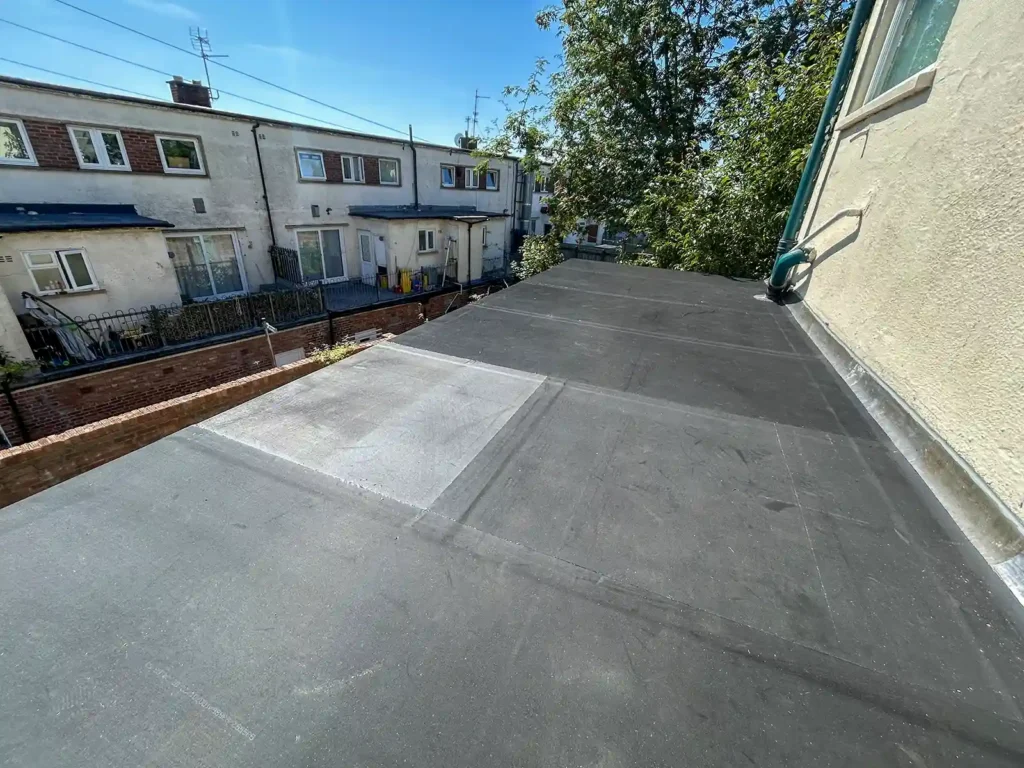
Torch-on felt, also called mineral felt or bitumen felt, comes in rolls with a layer of bitumen on the underside. The roofer heats the underside with a torch, so the bitumen softens and bonds to the surface below. Modern systems use two or more layers, a base layer and a cap sheet, which together give a longer-lasting, more durable roof than the single-layer felt of the past.
How the layers work
- Deck: a dry, sound deck, usually OSB or plywood, laid to falls
- Vapour control and insulation: laid where the roof design requires
- Base layer: the first layer of felt, fixed or bonded to the deck
- Cap sheet: a second layer, often with a mineral surface, bonded over the base for weather protection
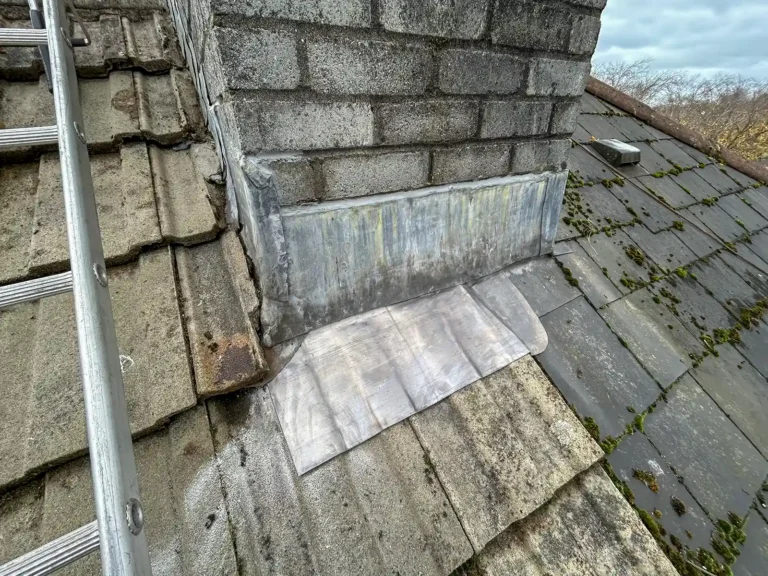
- Details: upstands, flashings and edges, built up in additional layers
- Edge trims: drip edges that carry water into the gutter
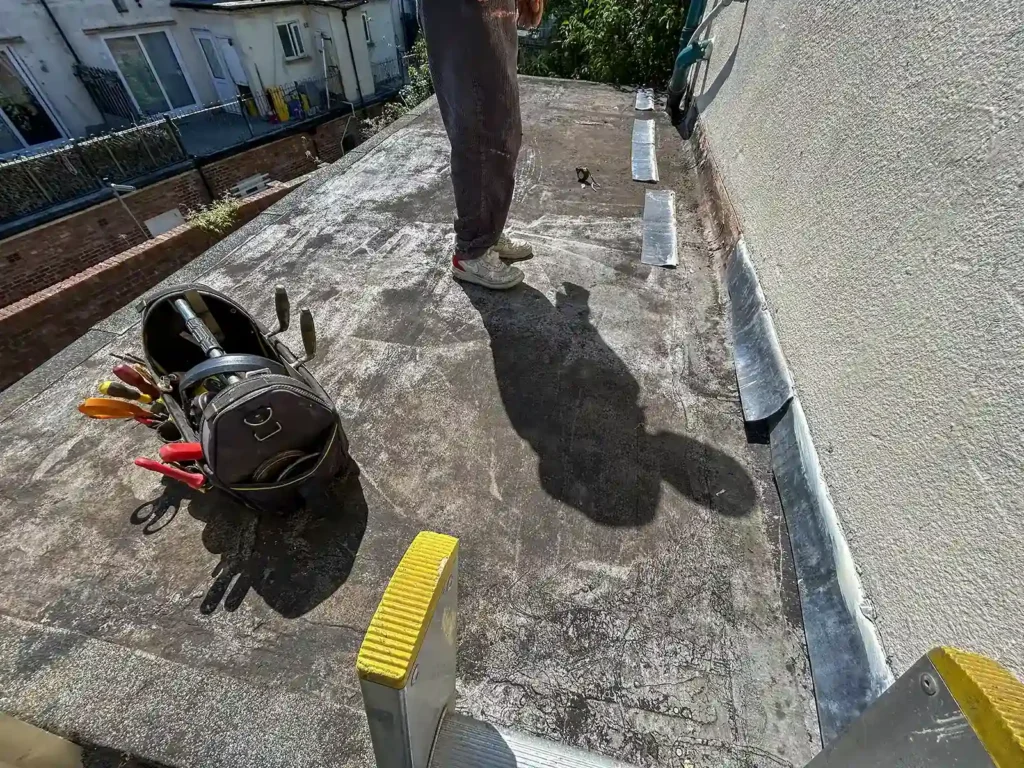
Advantages of torch-on felt
- A familiar, proven covering that many roofers know well
- Good value for small and medium roofs
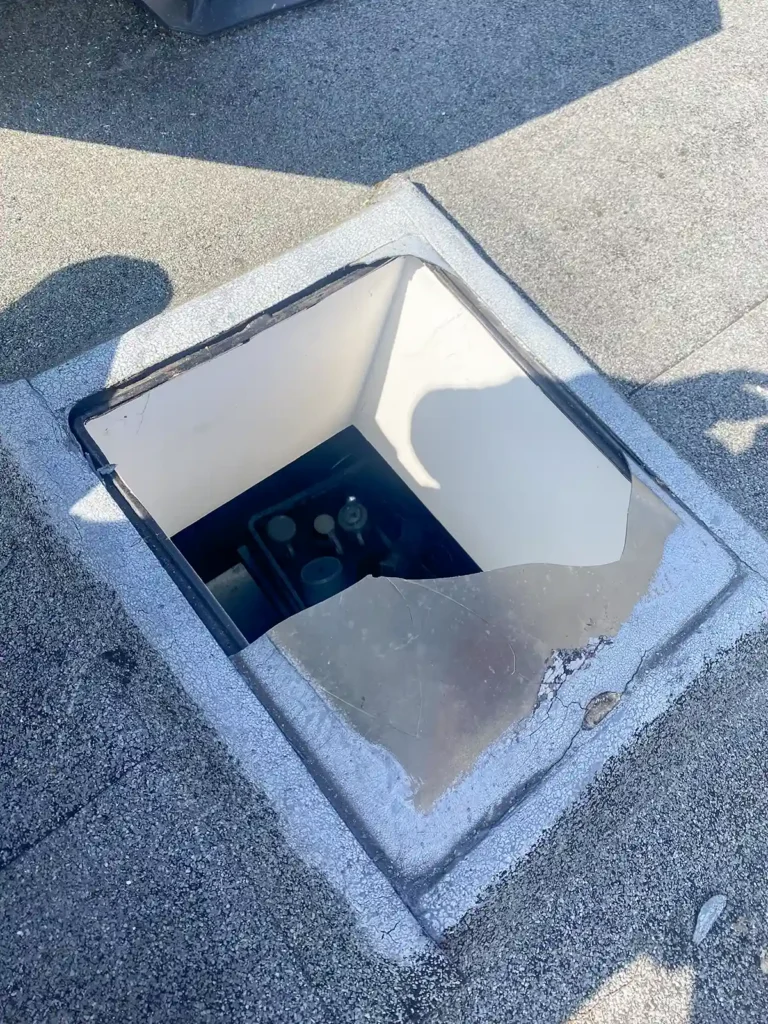
- Easy to repair and to add detail around pipes, rooflights and walls
- Mineral cap sheets give extra protection against sun and weather
- Can be used for new roofs, replacements and repairs
Where felt can go wrong
- Poorly lapped joints that open over time
- Single-layer or low-quality felt that splits or blisters
- Poor falls that let water pond
- Rotten decks under the covering
- Damaged edges and upstands that let water behind the felt
Most failures are down to the quality of the installation and the preparation, not the material. A good felt roof is built carefully, with the right falls, laps and details.
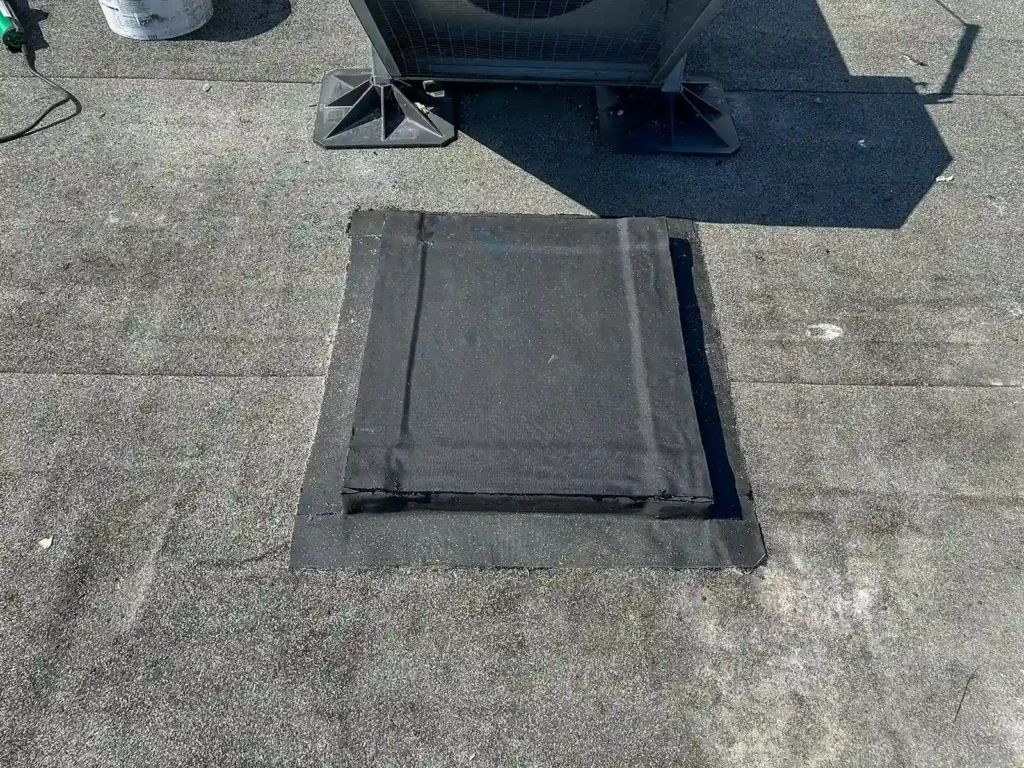
Torch-on felt repairs
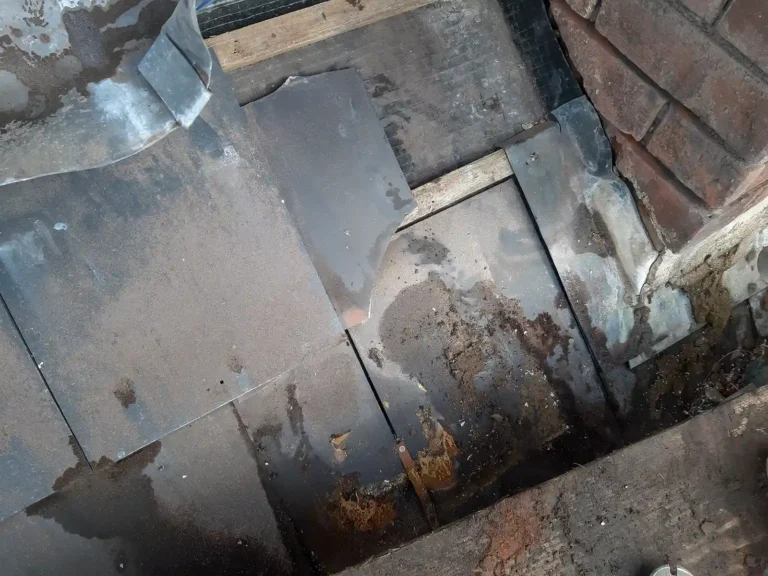
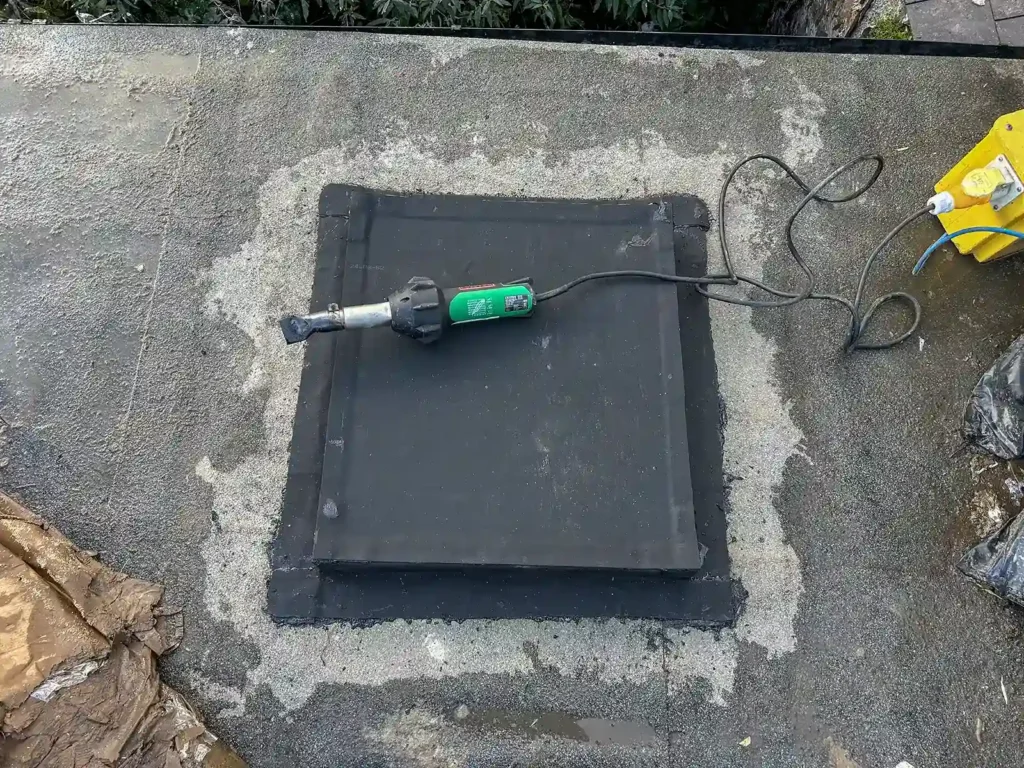
Small blisters, splits and damaged areas can often be repaired by cutting out the damaged section and bonding new felt over it, which is a good option when the rest of the roof is sound. If the felt is worn across the whole roof, or the deck is soft, a full re-roof is the lasting answer. See our guide to flat roof repairs for more.
Questions to ask your roofer
- How many layers will the roof have, and what is the cap sheet?
- Will the deck be replaced, and how will the falls be formed?
- How will the edges and upstands be finished?
- Will insulation be included?
- What guarantee comes with the work?
Be careful of any quote that does not say how many layers are being laid. A single-layer roof laid cheaply is a common cause of early failure.
Caring for a felt roof
Clear leaves and debris from the surface and outlets, look for splits and lifted edges after storms, and avoid walking on the roof. A yearly inspection catches small faults before they let water in. See our roof maintenance service, and roof repairs for felt roof faults. Need advice? Contact us.
Torch-on felt and safety
Torch-on felt is laid with a gas torch, so it needs trained, careful installers who know how to work safely around the roof edge, timber and flammable materials. Ask your roofer how the work will be done safely, and whether cold-applied or self-adhesive alternatives are an option for the roof.
Felt compared with other flat roofs
Felt is good value and easy to repair, but it is not the only choice. GRP, EPDM rubber and single-ply membranes each have their own strengths, depending on the shape of the roof, its use and your budget. If you are weighing them up, read our guides to single-ply flat roofs and GRP flat roofs.
Torch-on felt roof FAQs
How long does a torch-on felt roof last?
It depends on the quality of the felt, the number of layers, the installation and how well the roof is looked after. Ask your roofer what to expect and for the guarantee in writing.
Is torch-on felt a good flat roof covering?
A well-laid multi-layer felt roof is a proven, good-value choice for many flat roofs.
Can a felt roof be repaired?
Yes. Splits, blisters and damaged areas can often be repaired without replacing the whole roof.
What is a cap sheet?
The top layer of a felt roof, often with a mineral surface, which protects the layers beneath from weather and sun.
Do you fit and repair felt roofs in South Wales?
Yes. We fit and repair felt, GRP, single-ply and EPDM roofs across Cardiff and 16 more towns.
Never work on a roof yourself without proper safety equipment: see the HSE guidance on working at height.
Worried about your roof?
Call now to book a free roof inspection and get a fixed price in writing.