Flat roofs on extensions, garages, dormers and shop canopies all do the same job, but the covering you choose changes how they perform. These are the four systems we fit most often. Here are the main flat roof options, compared in plain English.
EPDM rubber
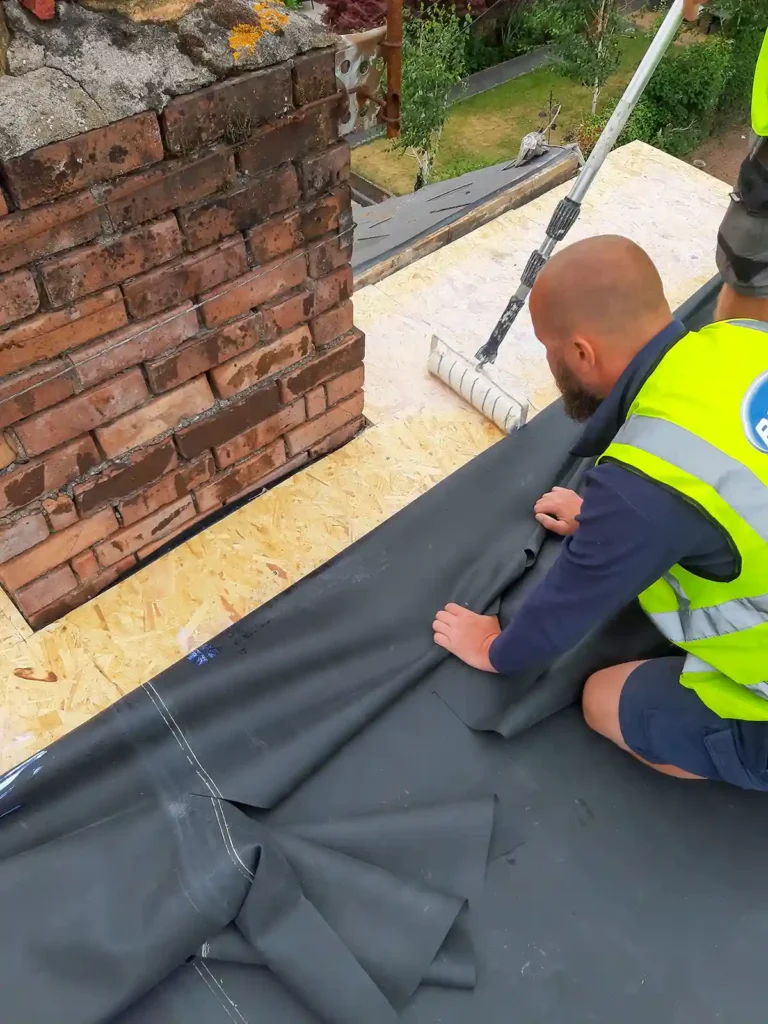
EPDM is a single sheet of synthetic rubber, usually bonded to a timber deck. Because it is one piece, there are few joints to fail, and it copes well with movement. It suits most small and medium domestic flat roofs.
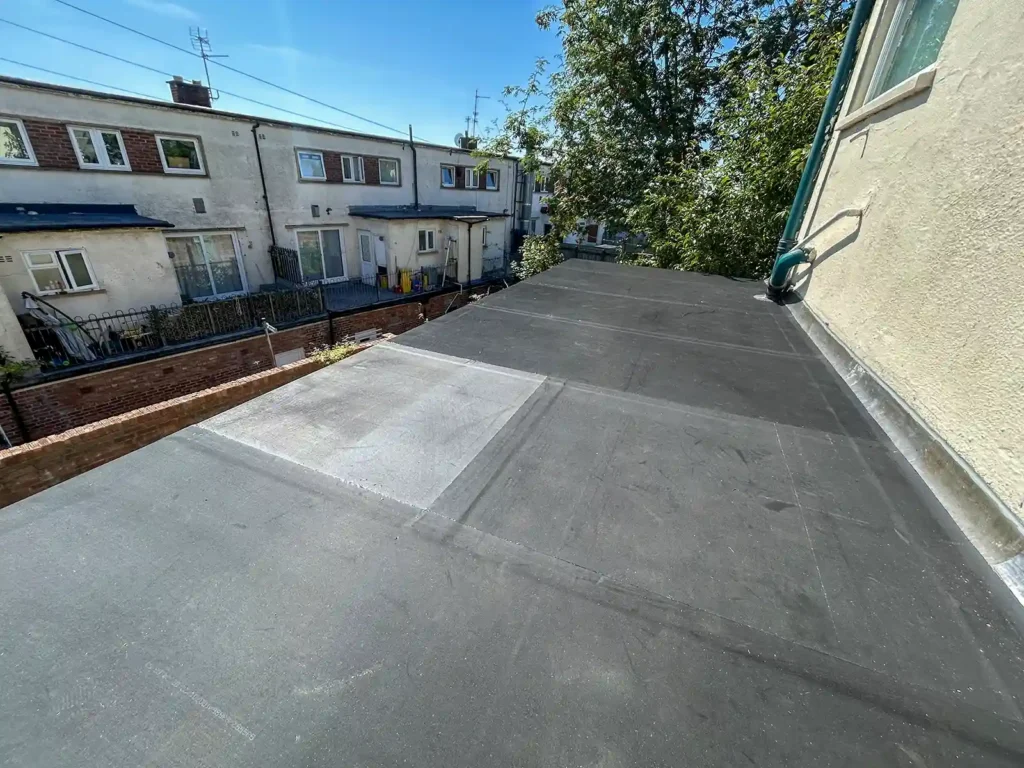
GRP fibreglass
GRP is laid as a liquid resin with glass fibre matting, then sets hard into a seamless shell. It works well on roofs with awkward shapes, and gives a tough surface for light foot traffic.
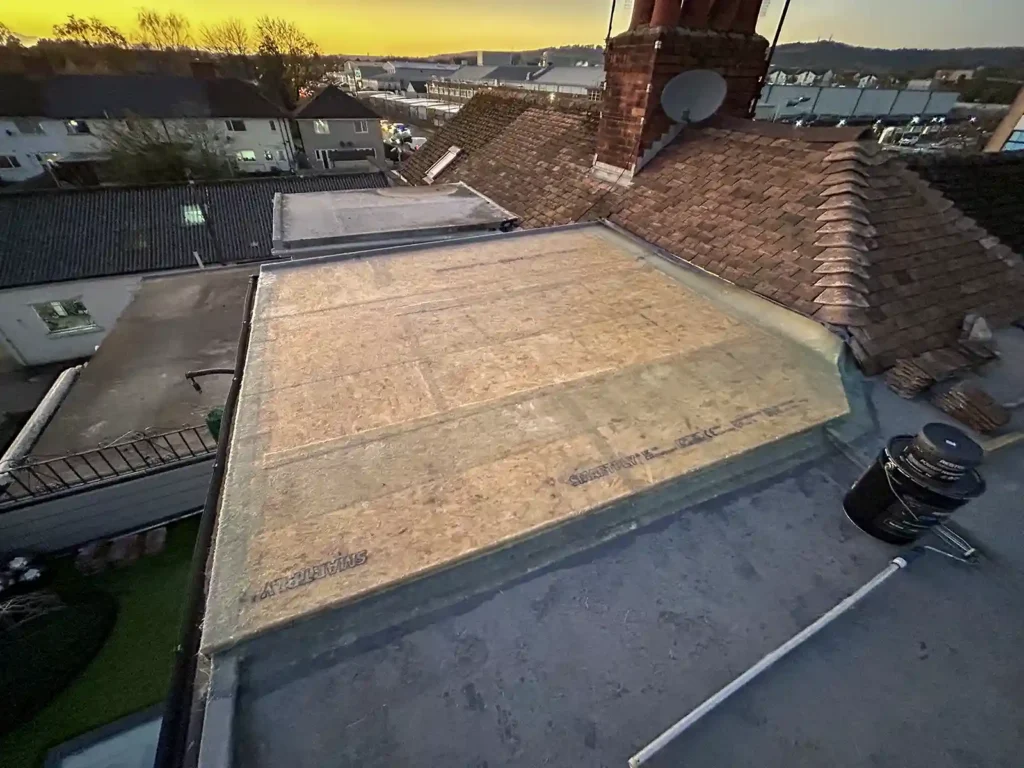
Single-ply membranes
Single-ply membranes such as PVC are supplied in sheets and fixed mechanically or bonded, with the joints heat welded. They are common on larger and commercial roofs, and on dormers and canopies.
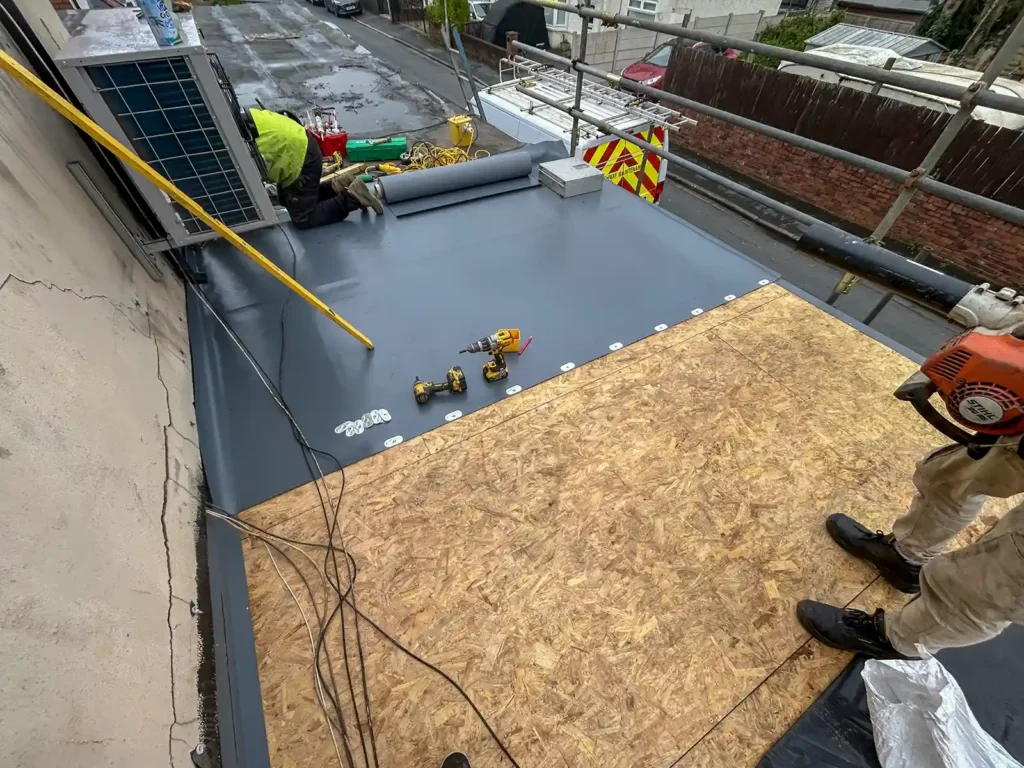
Felt
Torch-on felt in layers is a traditional flat roof covering. Modern high-performance felt systems are still widely used, especially on repairs and where the existing detailing suits it.
EPDM rubber: pros and cons
- Pros: few joints, flexible, good for small and medium roofs, quick to fit
- Cons: can be punctured by sharp objects, and edges and details need careful fitting
GRP fibreglass: pros and cons
- Pros: seamless, strong, good for roofs with awkward shapes, can take light foot traffic
- Cons: needs a firm, stable deck, and cracks can occur if the structure moves
Single-ply membranes: pros and cons
- Pros: suited to larger and commercial roofs, joints heat welded, durable
- Cons: needs skilled installation, and is not always the best choice for very small or very complex roofs
Felt: pros and cons
- Pros: familiar and widely used, good for repairs and many domestic roofs
- Cons: joints can fail if poorly fitted, and quality varies between systems
Warm and cold flat roofs
A cold flat roof has insulation between the joists and needs ventilation to stop condensation. A warm flat roof has insulation above the deck, which keeps the structure warmer and reduces condensation risk. Which one suits you depends on the building and existing construction. Ask your roofer to explain which they are proposing.
Choosing the right flat roof system
The best choice depends on the size and shape of the roof, how it will be used, access for the installer and your budget. Ask for a fixed price in writing for the system recommended, a description of the preparation, the guarantee, and how edges, rooflights and upstands will be detailed.
Whatever the covering
- A sound, dry deck (usually OSB or plywood)
- Correct falls so water can run off
- Properly detailed edges, trims and upstands
- Insulation and ventilation where the roof is warm or cold
Ask your roofer to explain which system they recommend and why, and to give you a price in writing. See our roof replacement service for flat and pitched roofs.
Edges, upstands and rooflights
Most flat roof leaks start at the details, not in the middle of the roof. Edge trims, upstands against walls, rooflights, pipes and outlets all need careful flashing and sealing. When comparing quotes, ask how each of these will be finished.
The deck underneath
A new covering is only as good as the deck it sits on. Soft, rotten or damaged boards should be replaced before the new system is laid, and the deck should have the right falls so water drains away. Ask whether the deck will be checked and repaired as part of the work.
Insulation and building regulations
Replacing a flat roof can mean upgrading insulation to meet current standards. Your roofer should explain what applies to your roof and make sure the work meets the requirements, so you are not caught out later.
Guarantees and workmanship
Many flat roof problems come from poor workmanship, not the material itself. Ask who will fit the roof, how many similar roofs they have fitted, and what guarantee they give on the installation. A manufacturer guarantee on the materials is useful, but a workmanship guarantee from the installer matters just as much.
Maintaining a new flat roof
Even a brand new flat roof needs looking after. Clear leaves and debris, check the edges and outlets after storms, and have the roof inspected once a year. Small faults caught early can be repaired quickly and cheaply.
Flat roof FAQs
What is the best flat roof covering?
EPDM, GRP, single-ply and felt all work well when properly fitted. The best choice depends on the roof, its use and your budget.
How long does a flat roof last?
It depends on the material, the installation and how well the roof is cared for. Regular checks help it last longer.
Can I walk on my flat roof?
Some systems, such as GRP, take light foot traffic. Check with your roofer, and avoid walking on a roof unless it is designed for it.
What is a warm flat roof?
A warm roof has insulation above the deck, which reduces condensation inside the roof structure.
Do you fit flat roofs in South Wales?
Yes. We fit EPDM, GRP, single-ply and felt flat roofs across Cardiff and South Wales.
More about flat roof options
Never work on a roof yourself without proper safety equipment: see the HSE guidance on working at height.
Worried about your roof?
Call now to book a free roof inspection and get a fixed price in writing.