Warm, moist air from cooking, washing and breathing rises into the loft. If it cannot escape, it condenses on cold surfaces, and over time this can cause mould, damp insulation and rotting timbers. A well-ventilated roof lets that moisture out. Good roof ventilation keeps the loft dry and the roof structure healthy.
Signs of poor ventilation
- A musty smell or visible mould in the loft
- Water droplets on the underside of the roof felt in cold weather
- Damp or compressed insulation
- Black spots on rafters and timbers
- Damp patches on upstairs ceilings with no leak above

How roofs are ventilated
Air is allowed in at the eaves and out near the ridge, or through vents in the tiles or slates. Modern breathable membranes and dry ridge systems help air move through the roof space.
Keep insulation and ventilation working together
- Do not stuff insulation into the eaves where it blocks airflow
- Make sure bathroom and kitchen extractor fans vent outside, not into the loft
- Keep the loft hatch closed and sealed so warm air does not escape upward
- Check that vents are not blocked by debris, paint or nests
What causes condensation in a loft?
Every day a household produces moisture: cooking, showering, drying clothes and even breathing. Warm air carries that moisture upwards. If it reaches a cold loft and cannot escape, it condenses on cold surfaces such as the roof felt, timbers and nails. Over time that damp leads to mould, rot and damaged insulation.
Where ventilation is needed
- At the eaves, to let air in
- Near the ridge, or through roof vents, to let air out
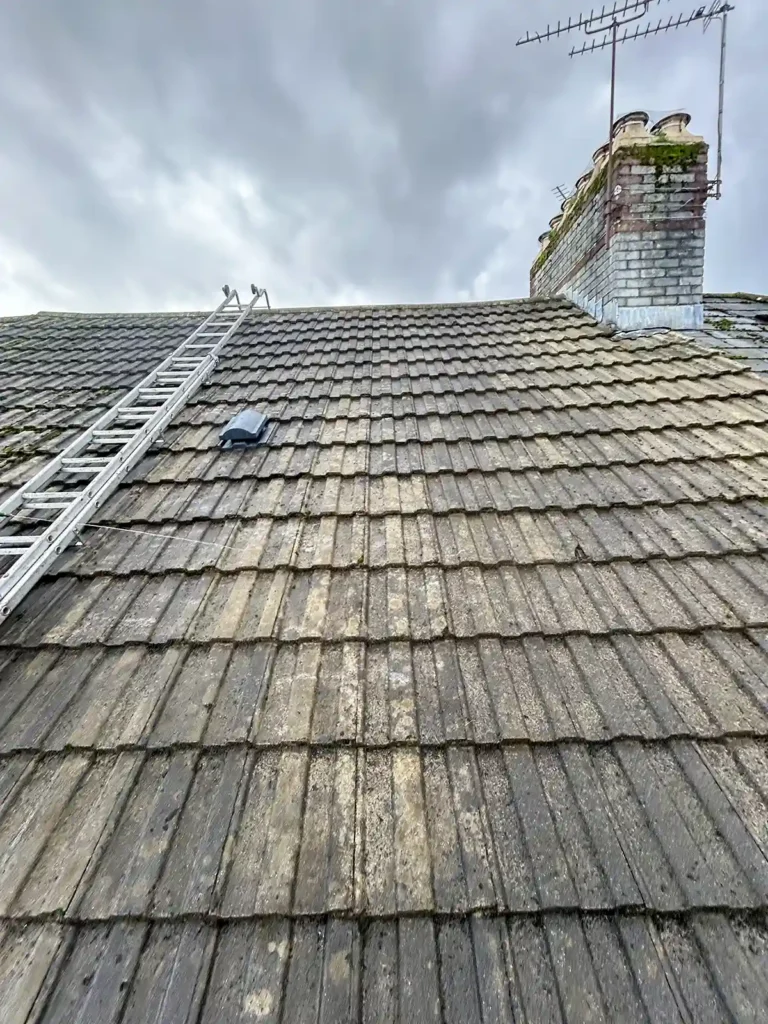
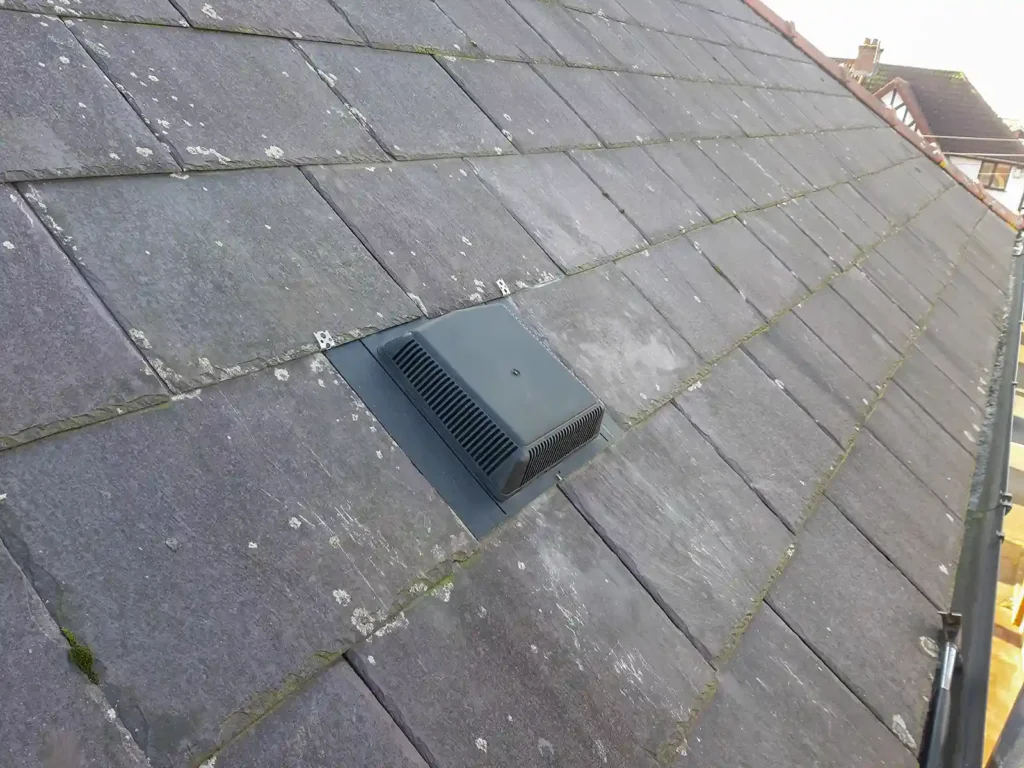
- Through tile or slate vents where a roof design needs them
- In flat roofs, depending on the construction
- From bathrooms and kitchens, through extractor fans that vent outside
Common ventilation mistakes
- Blocking eaves vents with insulation
- Venting bathroom fans into the loft instead of outside
- Covering roof vents with paint, debris or insulation
- Leaving the loft hatch open or unsealed
- Adding insulation without checking airflow
Insulation and ventilation: how they work together
Insulation keeps heat in the living space, and ventilation keeps the roof space dry. A roof with plenty of insulation but poor airflow can trap moisture, so both need planning together. If you are adding loft insulation, use methods that keep the eaves clear.
Signs of a ventilation problem
Look for a musty smell, mould on rafters, damp or flattened insulation, or condensation on the underside of the roof felt in cold weather. A roofer can inspect the loft and advise on vents or other changes.
When to ask a roofer
If you see condensation, mould or damp, ask a roofer to inspect the roof space. Adding vents is often simple. See our roof maintenance service for regular checks and a written condition report.
What a roofer can do about ventilation
A roofer can fit tile or slate vents, eaves vents and ridge vents, check that insulation is not blocking the eaves and advise on extractor fan ducting. If the roof is being repaired or replaced, ventilation can be included in the work, which is often the easiest time to improve it.
Ventilation in flat roofs and extensions
Flat roofs and extensions have their own ventilation needs, which depend on whether the roof is warm or cold. If you notice condensation or damp on a flat roof ceiling, ask a roofer to check the construction.
Ventilation, insulation and energy bills
A well-ventilated, well-insulated roof helps keep your home warmer in winter and protects the building. Blocking vents to reduce draughts can cause hidden damp. Ask your roofer and your insulation installer to work together, so you get warmth without moisture problems.
Questions to ask your roofer about ventilation
- Does my roof have enough ventilation for its type and insulation?
- Are any vents blocked, and by what?
- What vents would you recommend, and where?
- Does any ductwork vent into the loft?
Ventilation and a new roof
If you are replacing the roof, it is the ideal time to improve ventilation. New breathable membranes, vented ridge and eaves systems and tile vents can all be fitted as part of the job. Ask your roofer to explain how the new roof will breathe, and to include the vents in the quote, so the new roof stays dry from the start.
Roof ventilation FAQs
Does my roof need ventilation?
Most roofs do. Ventilation lets moisture escape from the roof space and reduces the risk of condensation, mould and rot.
How do I know if my loft has a condensation problem?
Look for a musty smell, mould, damp insulation and water droplets on the roof felt in cold weather.
Can I add insulation without causing damp?
Yes, as long as airflow at the eaves and ridge is kept clear and moisture from the house is vented outside.
Can roof vents be added to an existing roof?
Often, yes. Tile and slate vents, eaves vents and ridge vents can be fitted by a roofer.
Do you fit roof vents in South Wales?
Yes. We fit roof vents as part of our roof repairs and roof replacements across Cardiff and South Wales.
The Planning Portal has official guidance on planning permission and building regulations for roofs.
Worried about your roof?
Call now to book a free roof inspection and get a fixed price in writing.