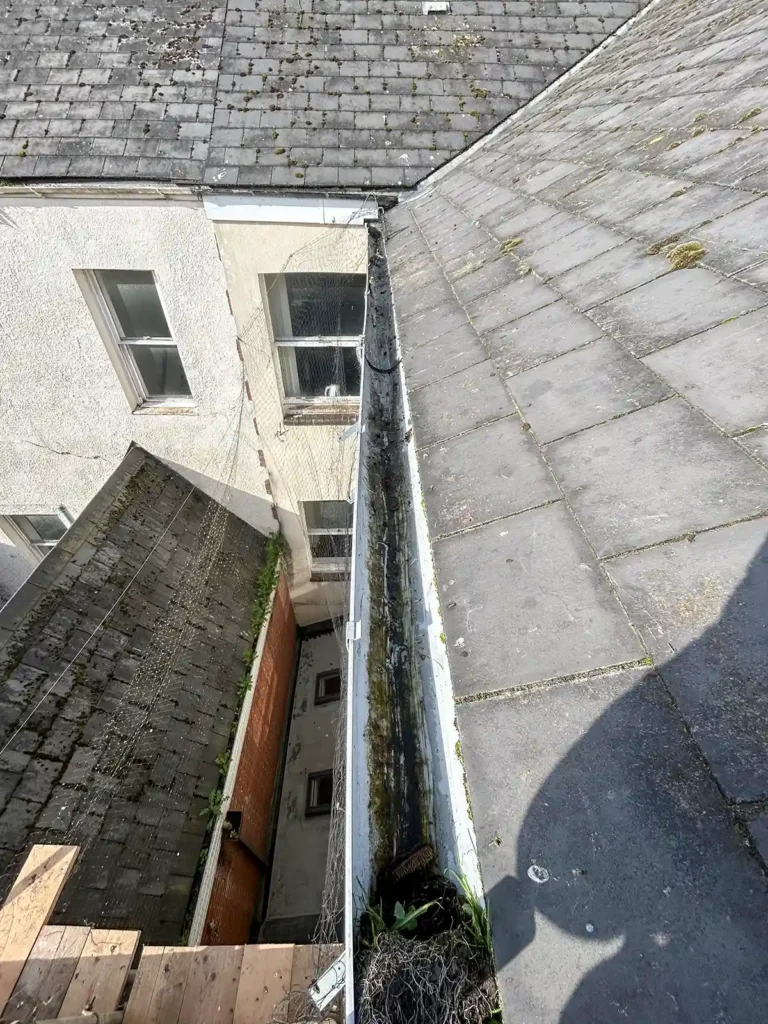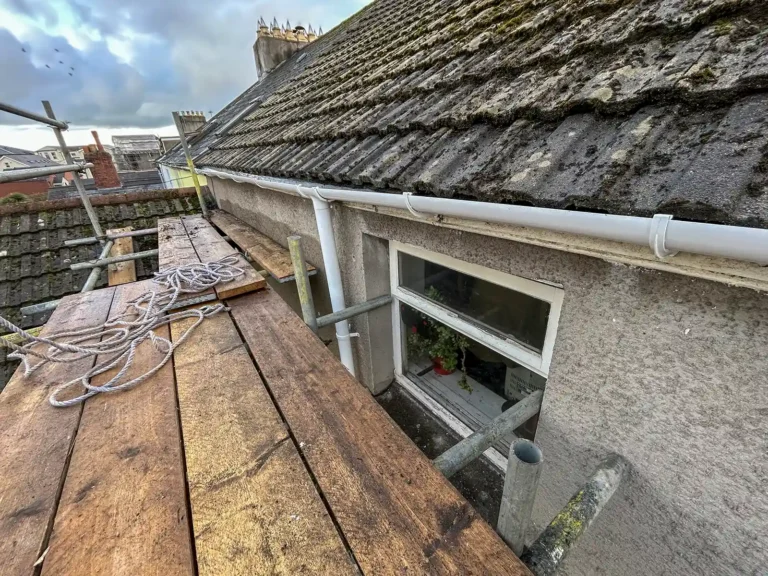
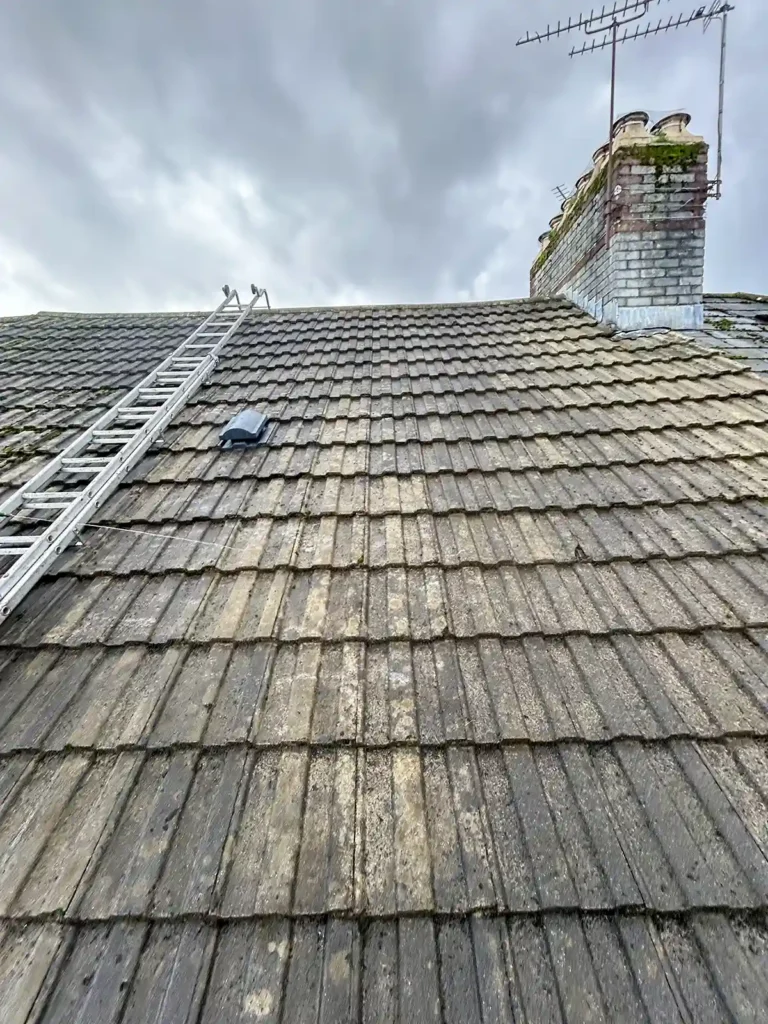
Damp, shaded roofs in South Wales are ideal for moss. A thin film on a tile may do no harm, but a thick carpet can cause problems. Here is how to decide. Here is what to know about moss on your roof and whether to remove it.
Why moss can be a problem
- It holds water against the tiles or slates
- It can lift tiles as it grows underneath them
- It washes into gutters and blocks downpipes
- Frost can crack tiles that stay wet
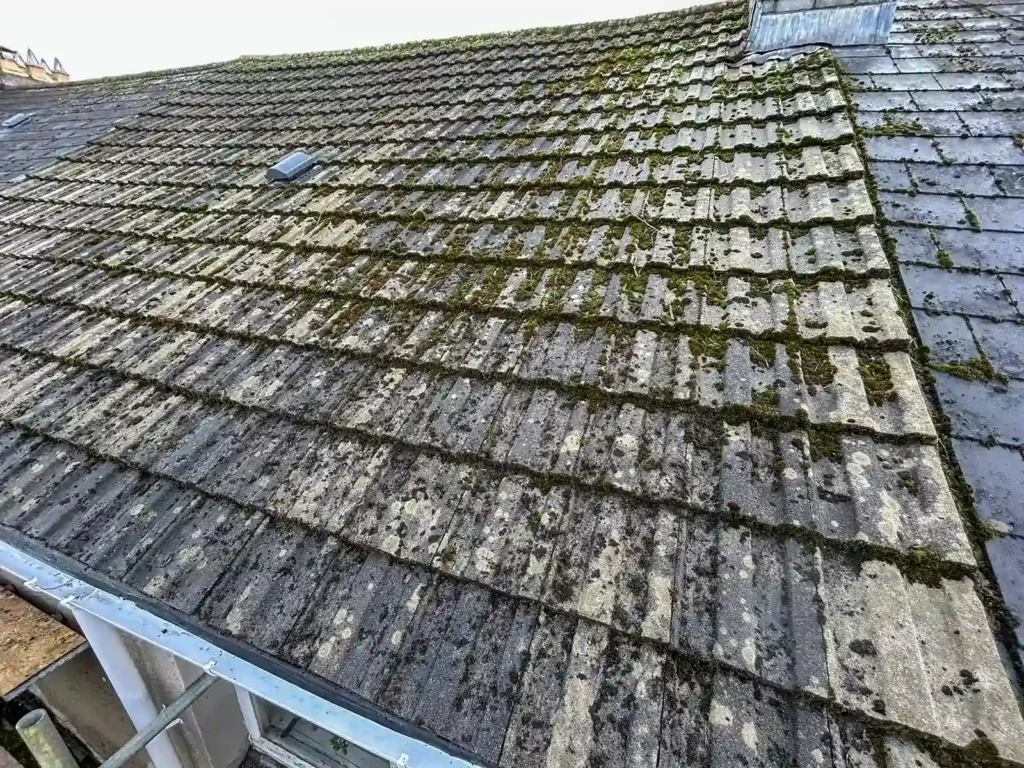
Should you remove it?
If the moss is thick, lifting tiles or filling gutters, then yes. If it is a light covering on a sound roof, you can monitor it. Moss growing on the north side or beneath trees is common and often returns.
How to remove it safely
A careful hand clean, brushing and a treatment is kinder to the roof than blasting it. High-pressure washing can force water under tiles and strip the surface, shortening the life of concrete tiles and damaging mortar.
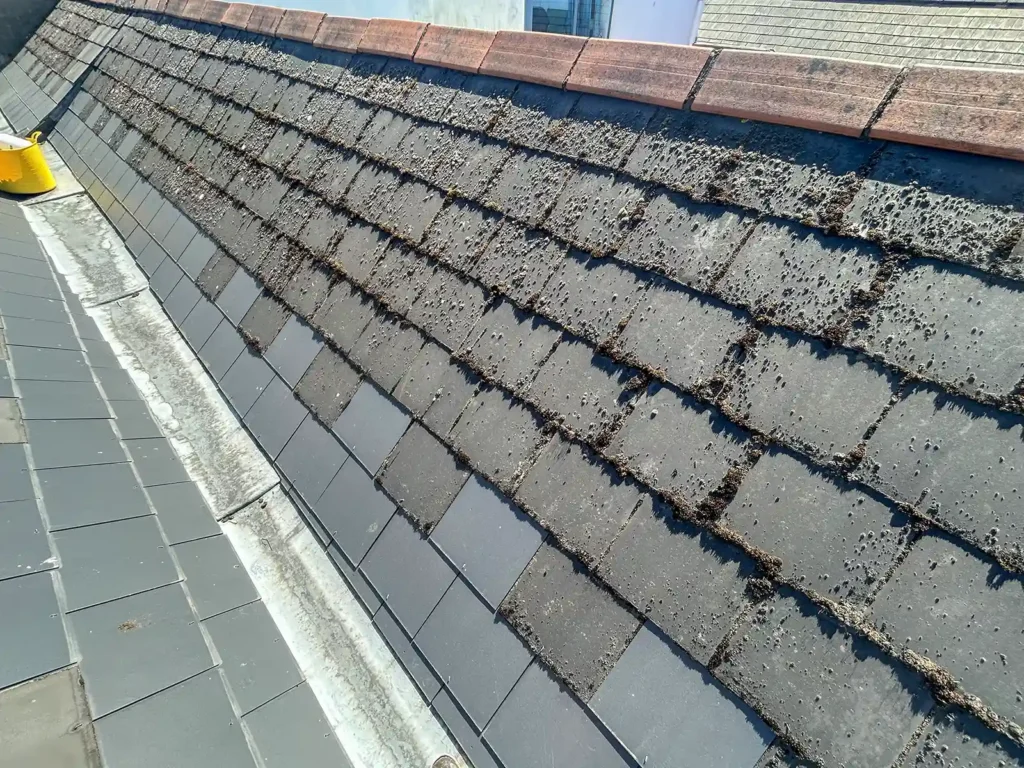
Moss, lichen and algae: what is on your roof?
- Moss is green and cushion-like, and holds water against the roof
- Lichen forms crusty grey, green or orange patches and clings tightly
- Algae shows as dark streaks, often on the shaded side of the roof
All three thrive on damp, shaded roofs. Moss causes the most problems, because it traps moisture and can lift tiles, but a heavy build-up of any of them is worth dealing with.
Why pressure washing is risky
Blasting a roof with a high-pressure washer can force water under tiles and slates, strip the protective surface of concrete tiles and loosen pointing. It can also push moss into gutters and drains. Careful hand cleaning, brushing and a suitable treatment are safer, and a roofer can check for damage as they go.
Moss on different types of roof
- Concrete tiles: the surface is porous, so moss can take hold and wear it down
- Slate: smooth, so moss builds mostly in the joins and shaded areas
- Flat roofs: moss and debris can block outlets and cause ponding
Preventing moss from returning
- Trim overhanging branches to let in light and air
- Clear gutters and valleys so the roof dries faster
- Fix slipped tiles and gaps where moisture collects
- Consider a suitable treatment after cleaning, as advised by your roofer
- Have the roof checked once a year
When moss is a sign of something else
Heavy growth can point to poor drainage, shaded conditions or a roof that is staying damp because of a fault. If moss keeps returning quickly, ask your roofer to look for the cause.
Preventing it coming back
- Keep gutters and valleys clear
- Trim back overhanging trees to let light and air reach the roof
- Have the roof checked each year, and treat moss early
A roof maintenance visit includes clearing moss and debris, checking flashings and ridges, and a written condition report. See our roof maintenance page.
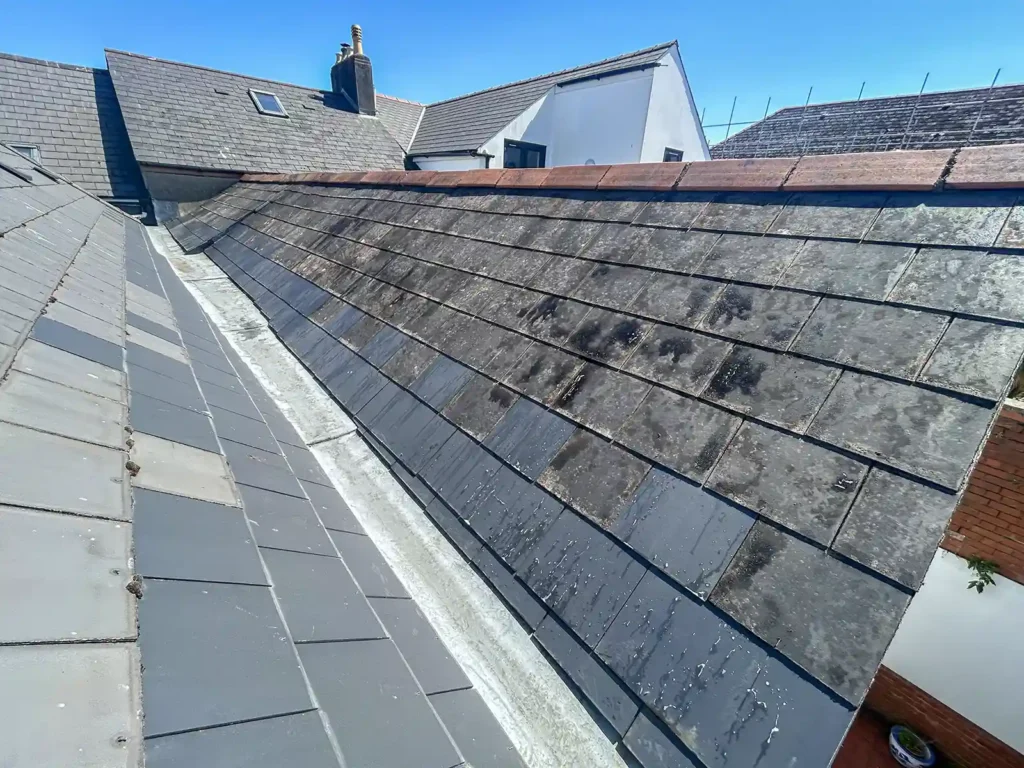
Why moss grows on some roofs and not others
Moss needs moisture, shade and a surface to hold on to. North-facing slopes, roofs under trees, and roofs in damp, sheltered spots stay wet for longer, so they grow moss faster. Porous concrete tiles hold moisture and give moss a better grip than smooth surfaces.
Gutters, valleys and moss
Moss washes down into the gutters and valleys, where it can block outlets and leave water standing. Cleaning moss from the roof without also clearing gutters and valleys only moves the problem. A thorough clean covers the roof surface, the valleys and the gutters.
When to call a roofer about moss
If moss is thick, lifting tiles, blocking gutters or spreading quickly, ask a roofer to inspect. They can clean the roof, check for damage underneath and advise how to keep it clear.
Moss and roof life
Moss and growth are one factor in how long a roof lasts. Left alone for years, they can shorten the life of concrete tiles, loosen pointing and block drainage. Regular, careful cleaning, together with a yearly roof inspection, helps your roof reach its full lifespan.
Moss and your roof guarantee
If your roof has a guarantee, check whether it requires regular maintenance or particular cleaning methods. Using the wrong method, such as high-pressure washing, might affect your cover.
Roof moss FAQs
Is moss on a roof bad?
A light covering may do little harm, but thick moss holds water, can lift tiles and blocks gutters, so it should be removed.
Can I remove roof moss myself?
Climbing onto the roof is dangerous. It is safer to have a roofer clean it, or to treat what you can reach from the ground.
Does pressure washing damage a roof?
It can. High pressure can force water under tiles, strip the surface of concrete tiles and damage pointing.
Will moss come back after cleaning?
It can, especially on shaded, damp roofs. Regular checks, clear gutters and trimming trees help.
Do you remove moss in South Wales?
Yes. Moss and debris removal is part of our roof maintenance across Cardiff and South Wales.
More about moss on your roof
Never work on a roof yourself without proper safety equipment: see the HSE guidance on working at height.
Worried about your roof?
Call now to book a free roof inspection and get a fixed price in writing.