Many homes in Penarth, Roath, Pontypridd and across the valleys have the original slate roof they were built with. Natural slate is a tough, long-lasting material, but the fixings, the lead work and the felt around it do not last forever. Here is how to look after a period slate roof, and how to spot when it needs attention.
Why slate roofs last so long
Slate is a dense, natural stone that does not absorb much water and does not break down in the weather. The slates themselves can outlast the fixings that hold them. That is why a roof can look in good condition from the road while the nails are corroding underneath.
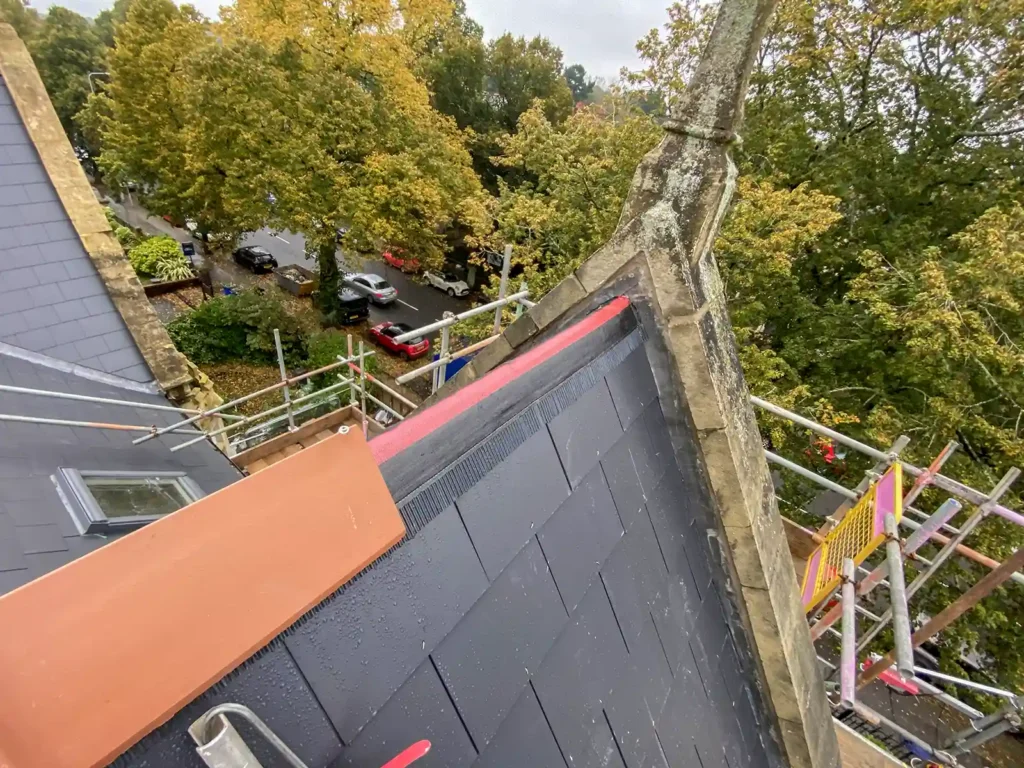
Common problems on period slate roofs
- Slipped or missing slates where the nails have rusted through
- Cracked slates from frost, foot traffic or falling debris
- Failed lead flashings around chimneys, bays and walls
- Tired felt and battens under the slates, often original
- Mortar ridge and hips that have cracked and fallen away
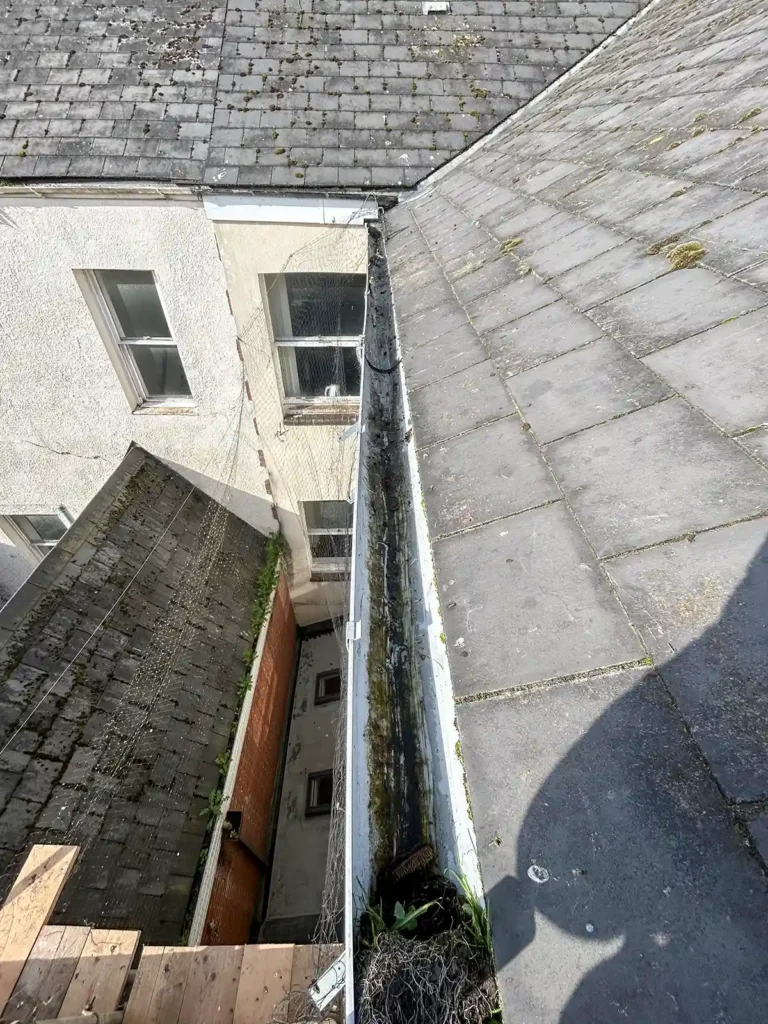
- Blocked valleys and shared gutters on terraced roofs
What you can check from the ground
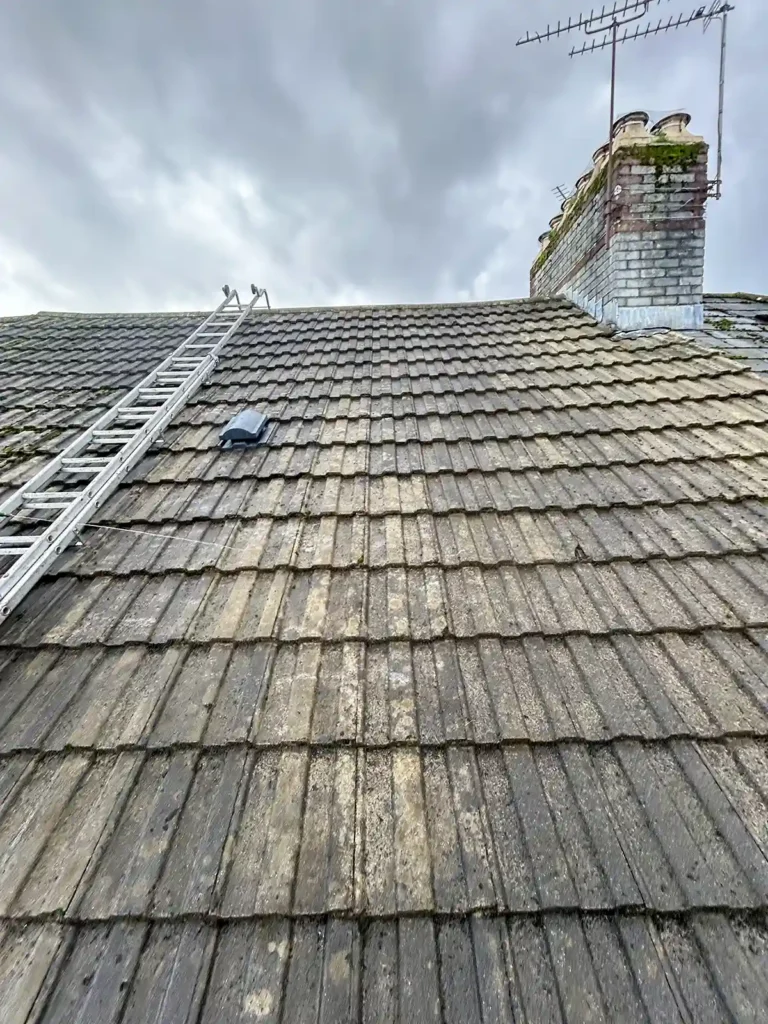
Walk around the house after heavy weather and look at the roof with binoculars or your phone camera zoomed in. Look for slates that sit lower than their neighbours, gaps, broken pieces on the ground, lifted lead and cracks in the pointing around the chimney. Never climb onto a slate roof yourself: slates crack easily and are very slippery.

Repairing slate: matching matters
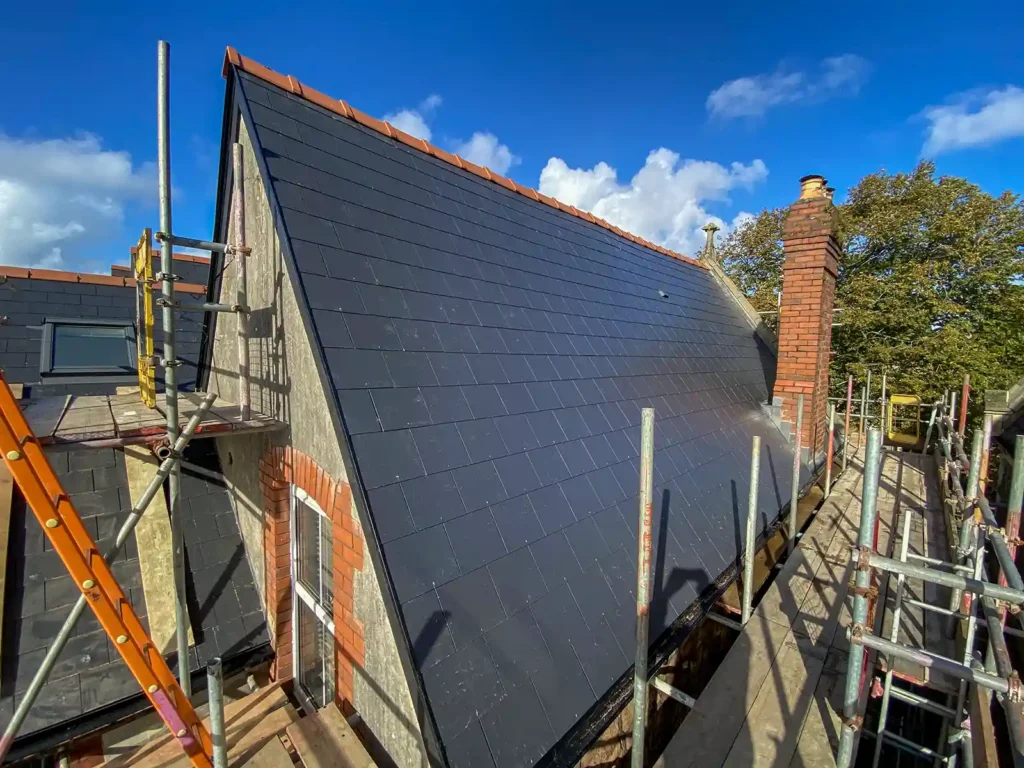
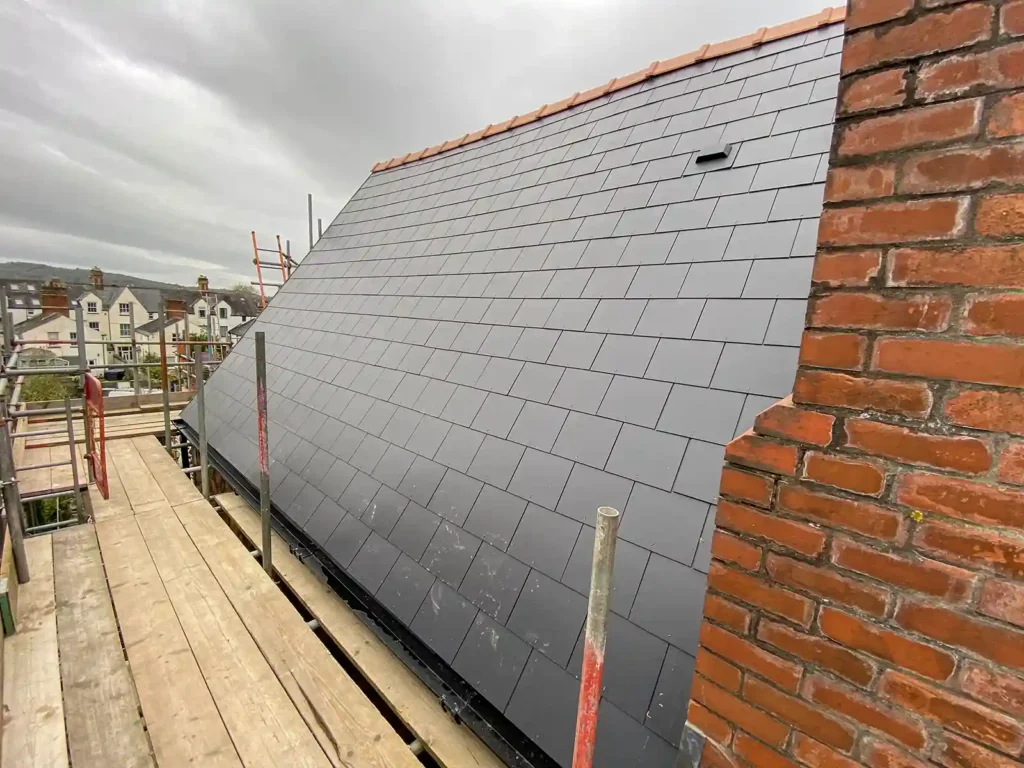
A good slate repair uses slates of the same size, thickness and colour as the existing roof, so the repair is neat and lasts. Where original slates are re-used they should be fixed properly, not nailed through the face or held with sealant. On many repairs we re-fix sound slates and replace only the broken ones.
Lead work: the weak point
Lead flashings seal the joins where a roof meets a chimney, wall or bay window. On an older home, these are often where leaks begin. A proper repair replaces the damaged lead and repoints it, rather than covering it with mastic. See our guide on why lead flashing matters for more.
When a slate roof needs more than a repair
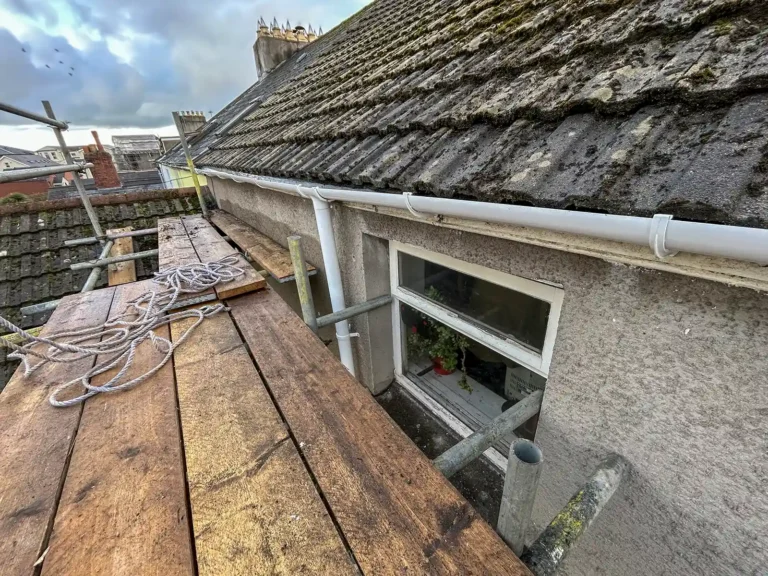
If the roof has lots of slipped slates, rusted nails everywhere and failed felt, patching can become a false economy. In that case, stripping and re-laying the existing slates on new felt and battens, adding new ones where needed, can give the roof a second long life. Our roof replacement team can survey the roof and explain your options.
A simple care routine
- Have the roof inspected once a year and after severe storms
- Keep gutters, valleys and chimney gutters clear
- Have loose slates and lifted lead fixed promptly
- Do not walk on the roof or use a pressure washer on it
- Keep a written record of repairs and inspections
Our roof maintenance visits include a roof health check and a written condition report, and our roof repairs team can fix what we find. If you are in Penarth, see our Penarth roofers page.
What a roofer looks for on an inspection
- The condition of the nails and fixings, not just the slates
- Lead flashings, valleys and gutters
- Chimney stacks, pointing and flaunching
- The felt and battens, where they can be seen from the loft
- The ridge and hips, and how they are fixed
- Any earlier repairs, and how well they were done
This is why a roof can look fine from the road and still need work. The inspection looks at the parts you cannot see from the ground.
Slate roofs and conservation areas
If your home is in a conservation area, the choice of materials and details can matter. Natural slate, lead flashings and traditional ridge tiles are often what is expected. Before any larger job, check with the council what applies, and ask your roofer how they will match the existing roof.
Slate roof FAQs
How long does a slate roof last?
Natural slate can last for a very long time, but the nails, felt and lead work around it wear out sooner. Regular inspections help you catch problems early.
Can slipped slates be fixed without replacing the roof?
Yes. Slipped or cracked slates can usually be re-fixed or replaced individually, as long as the rest of the roof and the felt are sound.
Is it safe to walk on a slate roof?
No. Slates crack easily and are slippery. Leave inspections and repairs to a roofer with the right equipment.
Should I use sealant on a slate leak?
Sealant is rarely a lasting fix. A proper repair replaces or re-fixes the slate or lead and finds the cause.
Do you repair slate roofs in South Wales?
Yes. We repair and replace slate roofs across Cardiff and 16 more towns in South Wales.
Never work on a roof yourself without proper safety equipment: see the HSE guidance on working at height.
Worried about your roof?
Call now to book a free roof inspection and get a fixed price in writing.