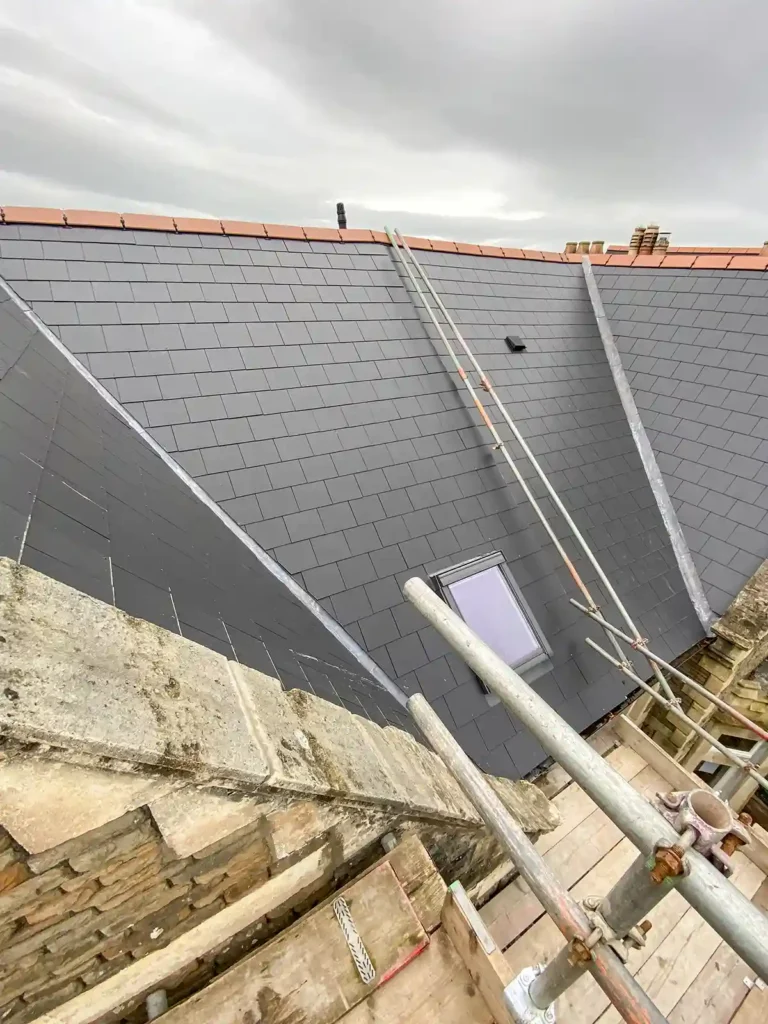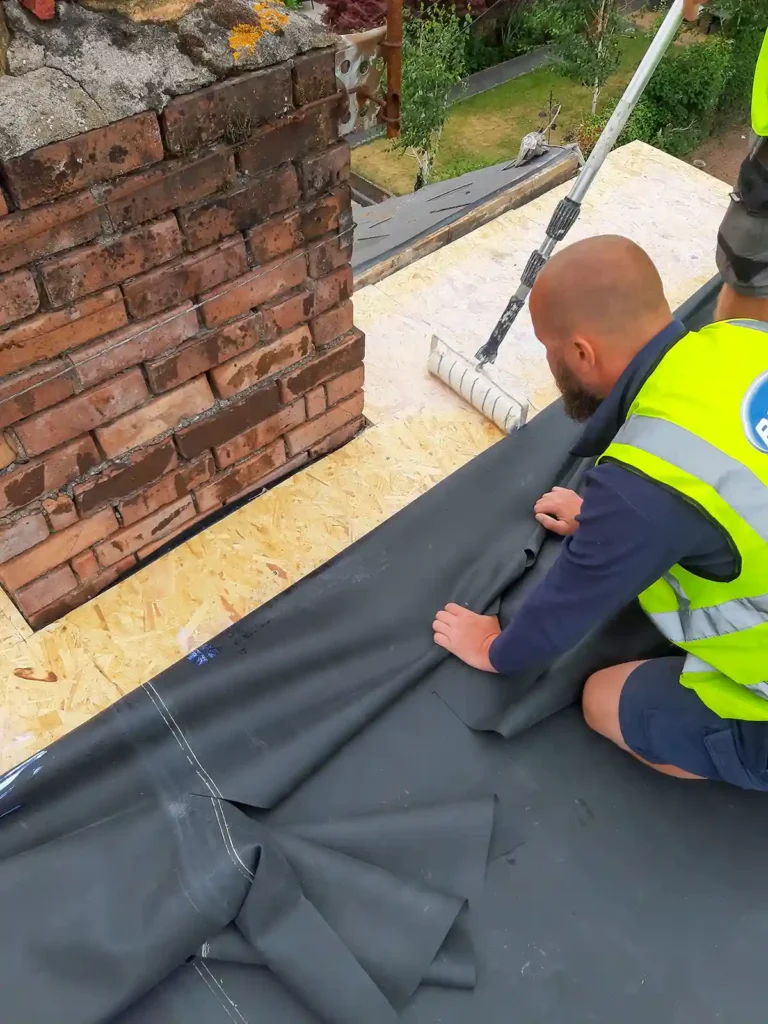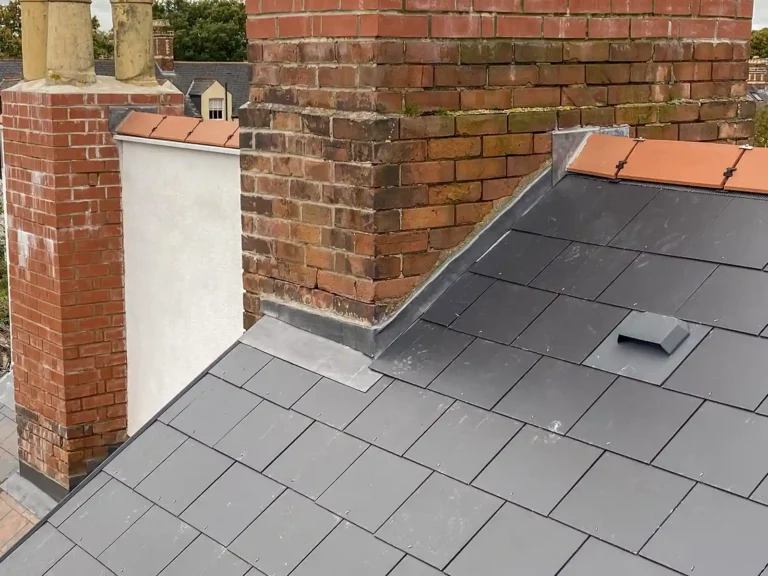
A roof can look fine from the street and still be close to the end of its life. Catching the warning signs early gives you time to plan and budget, instead of replacing the roof in a hurry after a leak. These are the seven signs we see most often. These are the signs you need a new roof, and what to do about them.
1. Repeated leaks
One leak is usually a local fault such as a failed flashing or a slipped tile, and a repair will fix it. When leaks keep coming back in different places, the roof covering or the felt underneath is often failing everywhere, and patching starts to cost more than it saves.
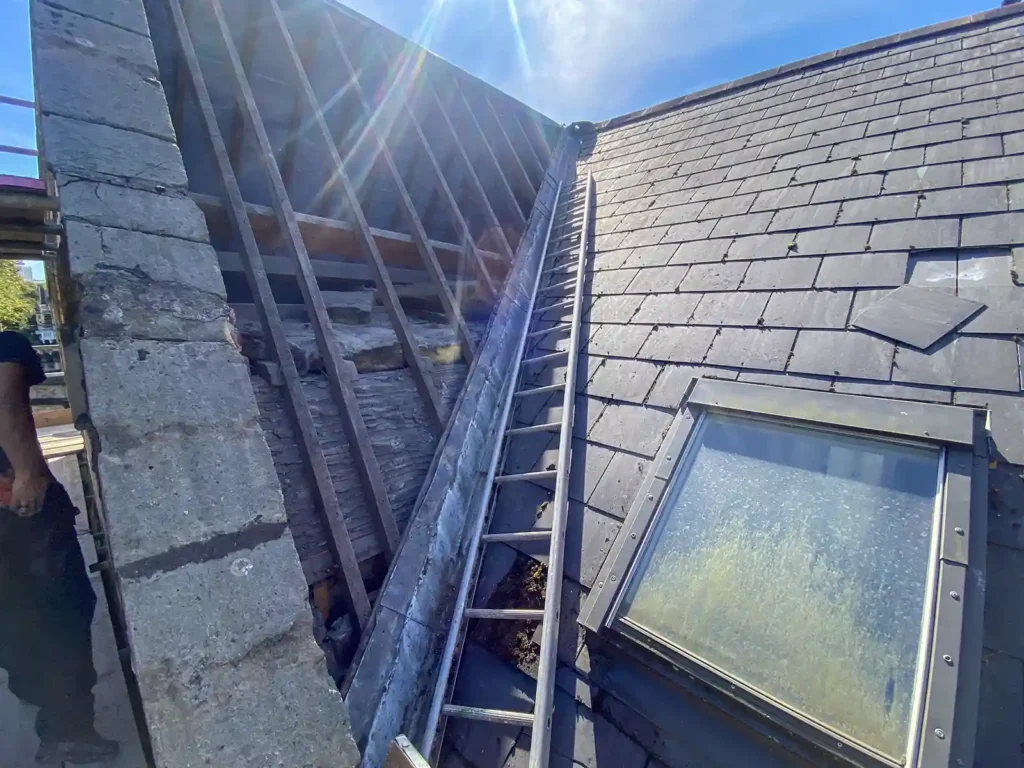
2. Slipped, cracked or missing tiles and slates
A few damaged tiles after a storm are normal. Slates or tiles slipping across the whole roof usually mean the fixings or battens have corroded or rotted, so replacing them one at a time will not last.
3. Sagging or uneven roof lines
A dip in the roof slope can point to rotten timbers or a structure that is struggling to carry the weight of the covering. Do not ignore this one. Ask a roofer to inspect it as soon as you can.
4. Daylight in the loft
If you can see daylight through the roof from inside the loft, water can get in too. Check on a bright day with the lights off.
5. Damp, stains or mould on ceilings
Brown stains, peeling paint or a musty smell on upstairs ceilings often start with a slow leak that has been going on for a while.
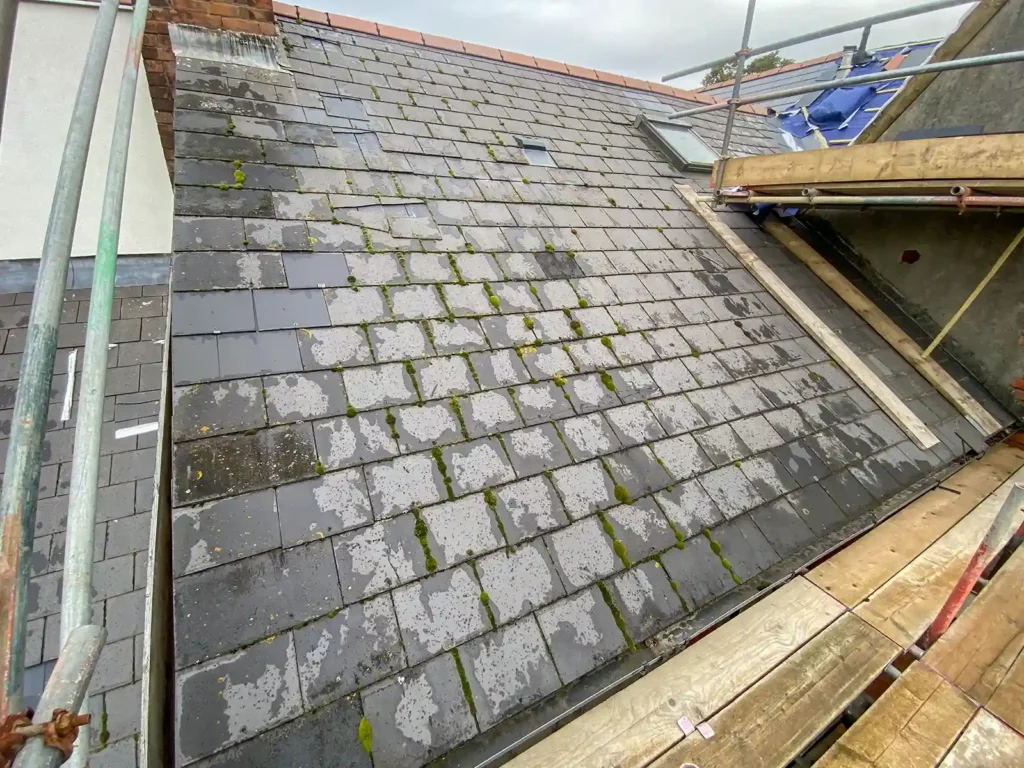
6. Heavy moss and crumbling tiles
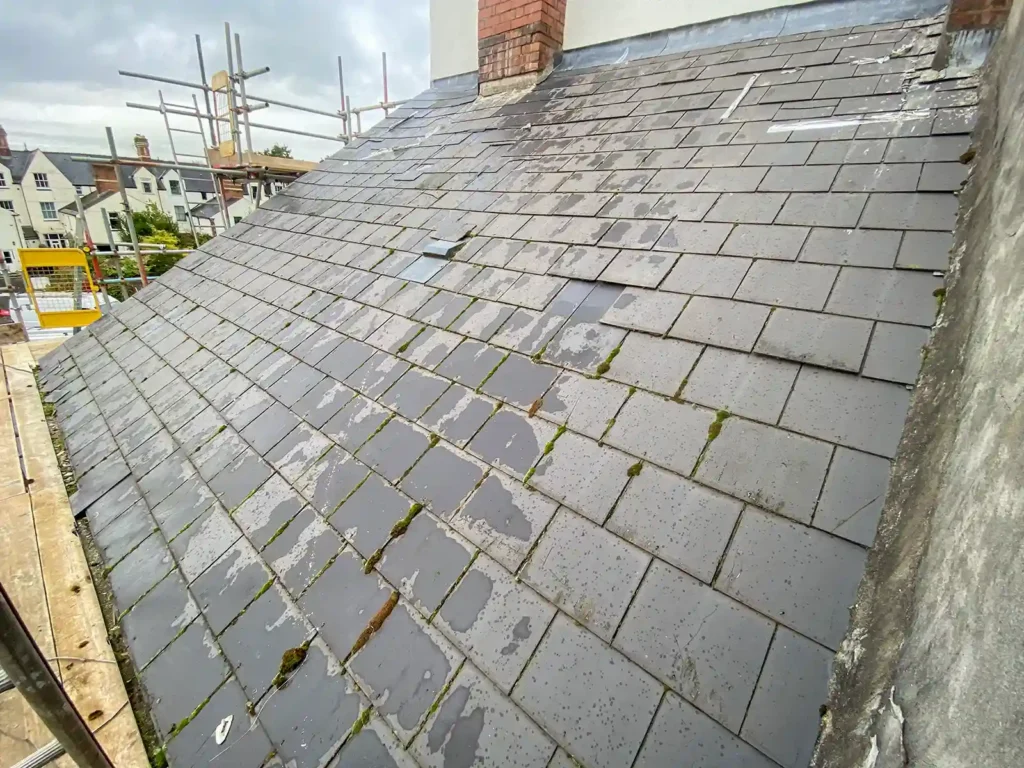
Moss on its own is not always a problem, but it holds water against the roof. On older concrete tiles that are flaking or crumbling, it can be a sign the surface has broken down.
7. Its age
Roofs do not last for ever. Felt and battens can fail long before the slates or tiles do, even when the roof still looks good. If your roof is old and you do not know when it was last checked, a survey is worth having.
How long should a roof last?
There is no single answer, because the lifespan depends on the covering, the quality of the original fitting, the weather the roof faces and how well it has been looked after. Natural slate is known for lasting a very long time, often longer than the felt and fixings beneath it. Concrete tiles also last well but can wear and gather moss. Flat roof coverings generally have a shorter life than pitched roofs, and the detailing at edges and joins matters as much as the material.
The better question is how much life is left in your roof. A roofer who inspects it can tell you whether it needs a repair, a larger repair, or replacing.
What to do if you think you need a new roof
- Do not panic: most signs of age are not emergencies, and you have time to plan
- Take photos of anything you are worried about, inside and out
- Ask a roofer to inspect the roof and explain what they find
- Ask for a fixed price in writing for both a repair and a replacement
- Compare what is included, such as scaffolding, ridge, flashings, vents and guttering
Can only part of a roof be replaced?
Sometimes. If one slope is worn out and the rest is sound, replacing that slope can make sense. But if the felt and battens have failed across the whole roof, partial replacement may only delay the problem. Ask your roofer to explain why they recommend replacing a section or the whole roof.
Planning a roof replacement
A roof replacement is a major job, so plan ahead. Spring and summer are popular because the weather is more settled, but good roofers work all year and protect your home if the weather turns. Allow time to get quotes, to choose the covering, and to decide whether to renew the fascias, soffits and gutters at the same time while the scaffolding is up.
A roof replacement should include more than tiles
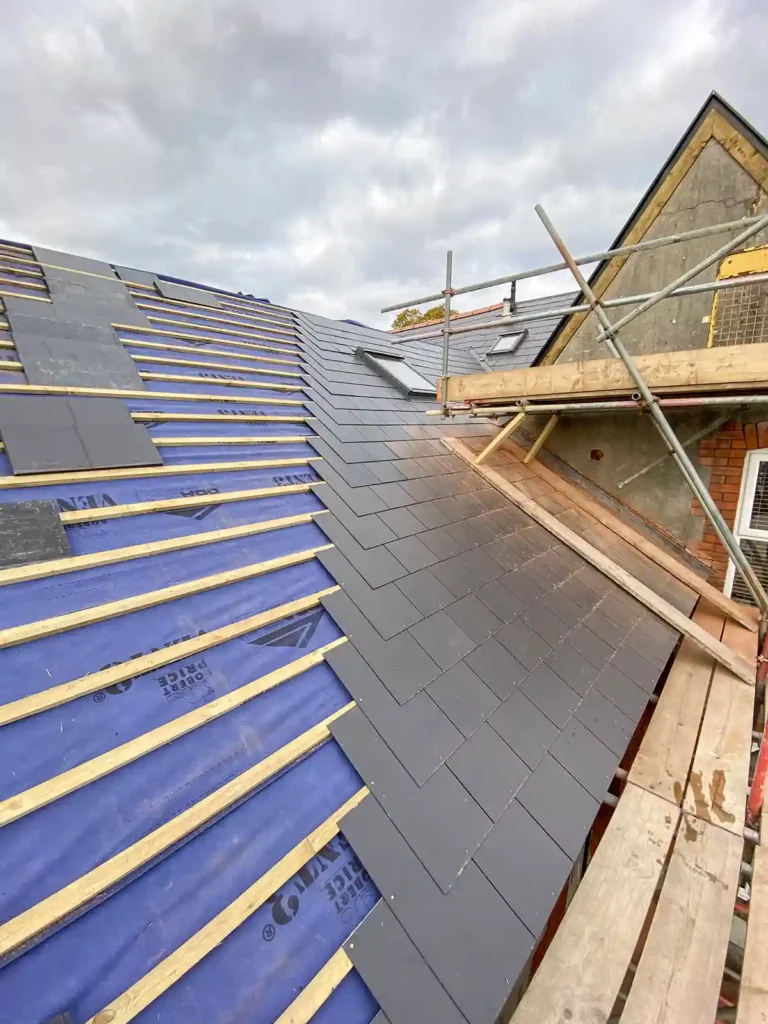
- A new breathable membrane and treated battens
- New lead flashings, valleys and ridge or dry ridge
- Roof vents where needed for ventilation
- Repair of any rotten timbers found when the roof is stripped
- Waste cleared away and a final check with you
What happens next?
A roofer should inspect the roof, explain what they find and give you a price in writing, so you can compare a repair with a replacement. If it is time for a new roof, see our roof replacement service, or roof repairs if the damage is limited.
Roof replacement FAQs
How do I know if my roof needs replacing?
Repeated leaks, widespread slipped or crumbling tiles, a sagging roof, daylight in the loft and perished felt are all signs. A roofer can inspect the roof and tell you honestly.
Is it better to repair or replace an old roof?
If the damage is limited and the rest of the roof is sound, a repair is usually enough. If problems are everywhere, replacement may be better value in the long run.
How long does a roof replacement take?
It depends on the size and complexity of the roof and the weather. Your roofer should give you a realistic time when they quote.
Will you give me a fixed price in writing?
Yes. We inspect first, then give you a fixed price in writing before any work starts.
Do you replace roofs in Cardiff and South Wales?
Yes. We carry out roof replacement across Cardiff and 16 more towns in South Wales.
More about signs you need a new roof
The Planning Portal has official guidance on planning permission and building regulations for roofs.
Worried about your roof?
Call now to book a free roof inspection and get a fixed price in writing.