A chimney is one of the most exposed parts of any roof, and it is behind a surprising number of leaks. The good news is that most chimney faults have a clear cause and a clear fix. This guide explains the parts of a chimney stack, the signs that something is wrong and what a proper repair involves. Here is what chimney repairs involve and when they are needed.
The parts of a chimney that can fail
Flashing
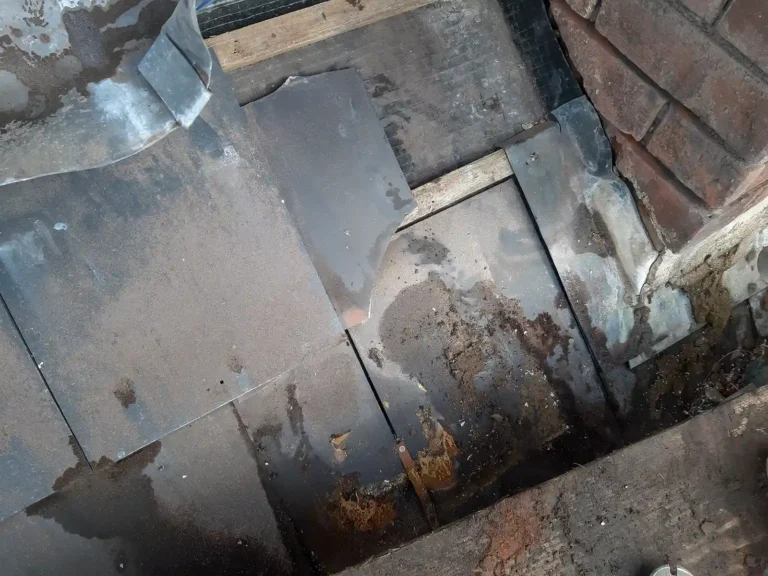
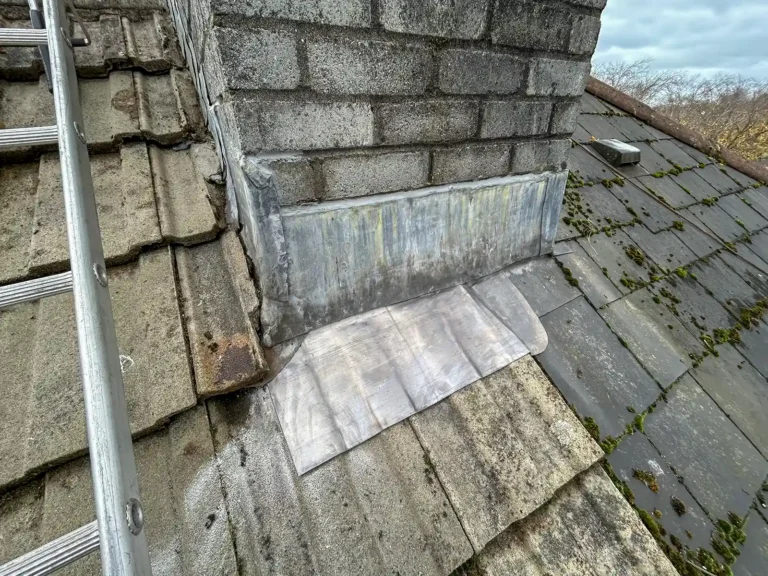
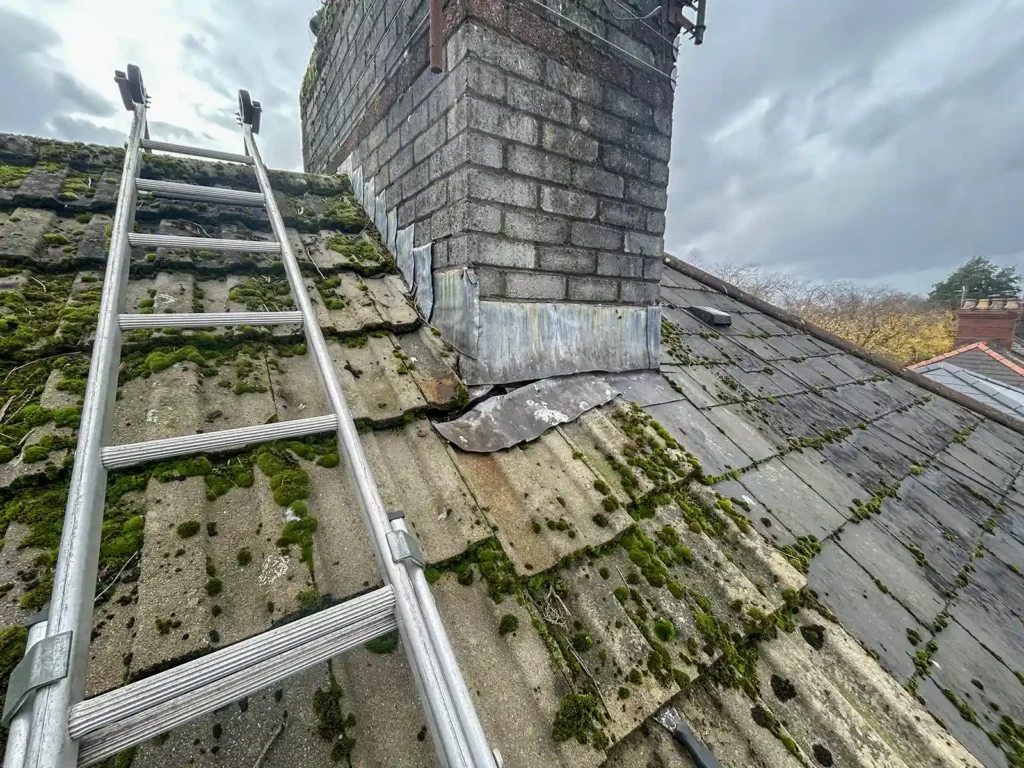
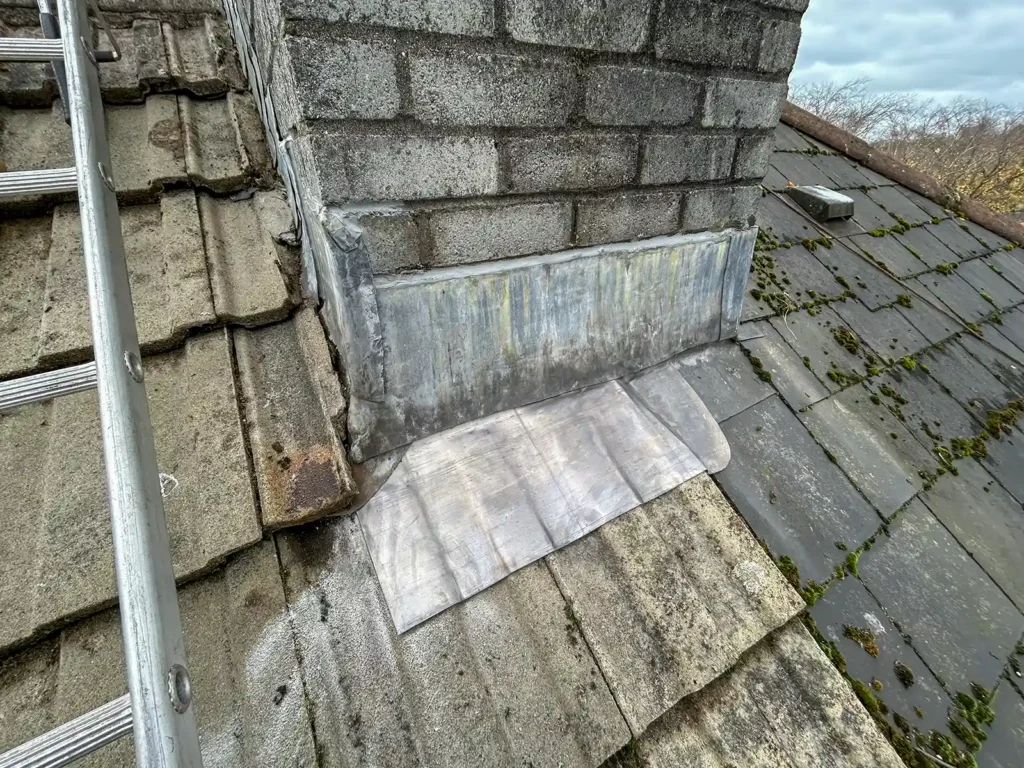
Lead flashings seal the joint between the chimney and the roof. An apron at the front, step flashings along the sides and a back gutter behind the stack carry water away. When lead lifts, cracks or is covered with mastic instead of being fixed properly, water gets in.
Flaunching
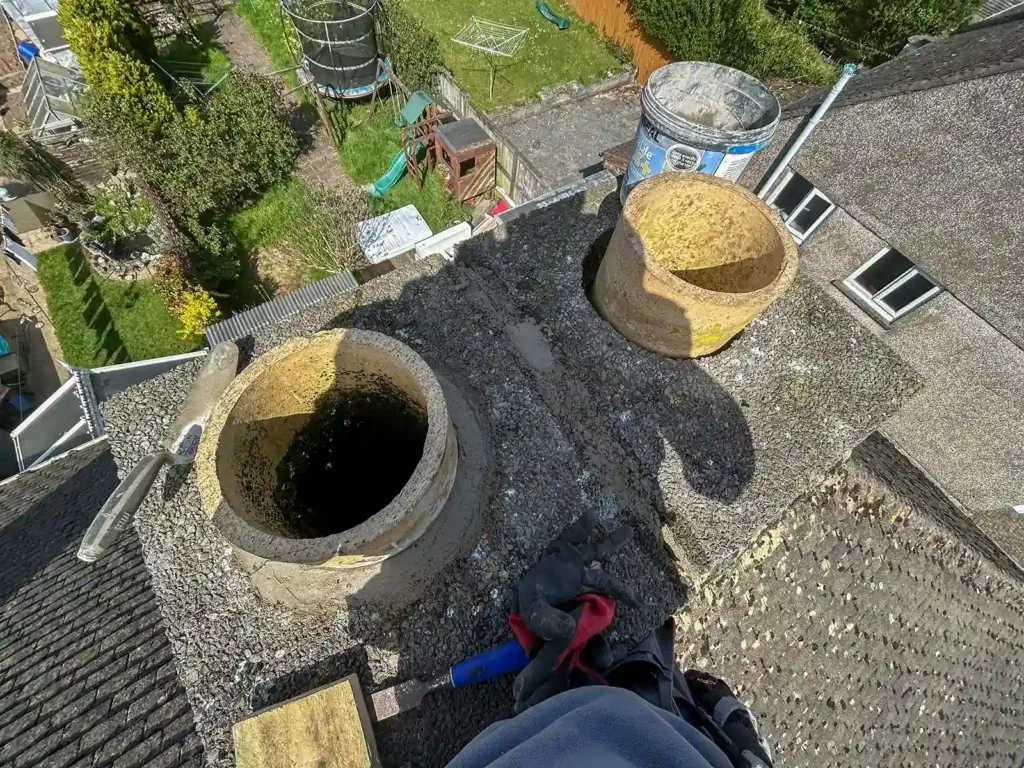
The flaunching is the sloping band of mortar at the top of the stack that holds the pots in place and sheds water. It can crack, crumble or fall away, letting rain run down into the stack.
Pointing
The mortar joints between the bricks keep the stack weather-tight. When they crumble, water soaks into the brickwork and can cause damp on the chimney breast inside.
Pots and cowls
Chimney pots, cowls and bird guards stop rain, birds and debris entering a flue. Loose or broken ones can fall or let water in.
Signs your chimney needs attention
- Damp patches or staining on the chimney breast, or on ceilings around it
- Lead that is lifted, torn or smeared with sealant
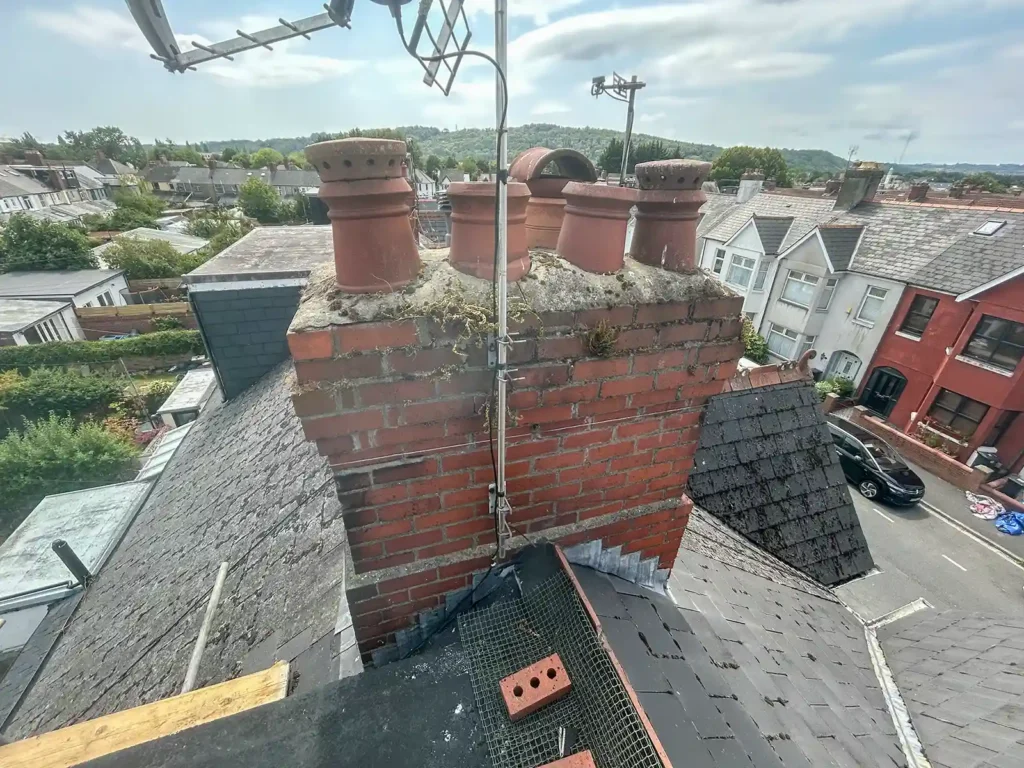
- Crumbling mortar, loose bricks or moss and plants growing from the stack
- A chimney that leans or has a visible crack
- Pots or cowls that are loose, damaged or missing
What a proper chimney repair involves
- Replacing damaged lead flashings and fixing them into the mortar joints properly
- Repointing the stack where mortar has failed
- Renewing the flaunching and re-bedding the pots
- Fitting new cowls or bird guards where needed
- Clearing moss, plants and debris from the stack and roof around it
Chimneys you no longer use
If a chimney is disused, it still needs looking after. A disused stack can be capped and ventilated, or taken down and the roof made good. Removing a chimney is a bigger job and may need other permissions, so get advice first and have a roofer explain the options.
Keep your chimney in good order
Have your chimney stack checked once a year and after storms. Small faults found early are quick to fix. We carry out lead flashing, pointing, flaunching and pot work as part of our roof repairs, and check chimneys on every roof maintenance visit. If you have a leak near the chimney, contact us for a free inspection.
How to tell a chimney leak from a roof leak
A stain on the chimney breast or on the ceiling around it does not always mean the chimney is the cause. Water can come in at the flashing, the flaunching, a cracked pot, or even a slipped slate nearby, and then travel along timbers. A roofer will trace the water back to its source, which is why a proper inspection beats a quick patch.
Preventing chimney problems
- Have the stack inspected once a year and after storms
- Keep gutters and valleys near the chimney clear
- Have loose or lifted lead fixed promptly
- Repoint crumbling mortar before water soaks the brickwork
- Fit cowls or bird guards where birds or rain can get in
Chimney repairs are best done in dry weather, but a roofer can often make a leaking chimney watertight first and finish the permanent repair when conditions allow.
Chimney work and your neighbours
On terraced and semi-detached homes, the chimney stack is often shared. A repair to the flashings, pointing or pots on one side usually affects the other, so it helps to tell your neighbour what is planned. A roofer can often repair both sides in one visit, which saves on access equipment and keeps the whole stack weather-tight.
If you are unsure who is responsible for a shared stack, check your deeds, and ask your roofer to explain what the inspection finds and what each part of the repair involves before any work starts.
Chimney repair FAQs
Why is my chimney breast damp?
Common causes are failed flashings, crumbling flaunching or pointing, and water getting in at the top of the stack. A roofer can inspect the stack and find the cause.
How often should a chimney be checked?
Once a year, and after severe storms, is a good routine.
Is sealant a good fix for chimney leaks?
It rarely lasts. A proper repair replaces the damaged lead and repoints it.
Can I repair a chimney myself?
Work at height is dangerous. Leave chimney repairs to a roofer with the right access equipment.
Do you repair chimneys across South Wales?
Yes. We carry out chimney flashing, pointing and pot repairs across Cardiff and 16 more towns.
More about chimney repairs
Never work on a roof yourself without proper safety equipment: see the HSE guidance on working at height.
Worried about your roof?
Call now to book a free roof inspection and get a fixed price in writing.