Rain, wind and damp air make roofs in Cardiff and South Wales work hard. After years of roof repair work across the area, these are the problems we see most often. These are the common roof repair problems we see most often.
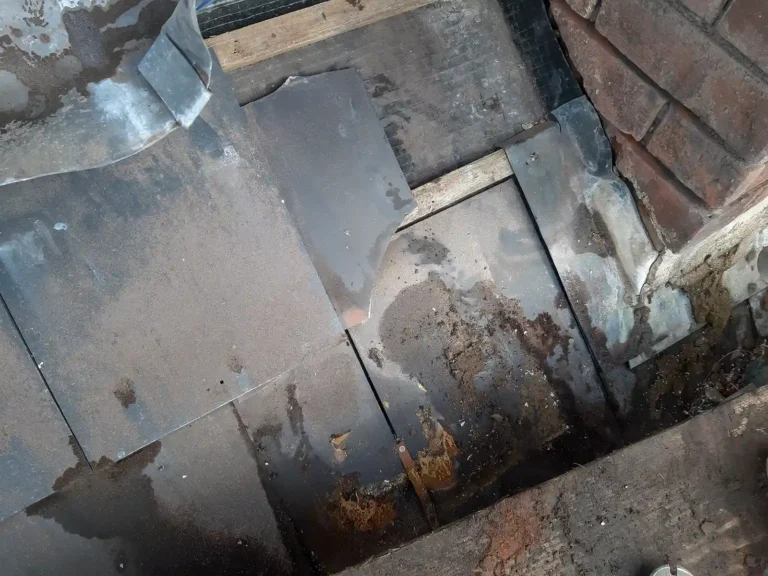
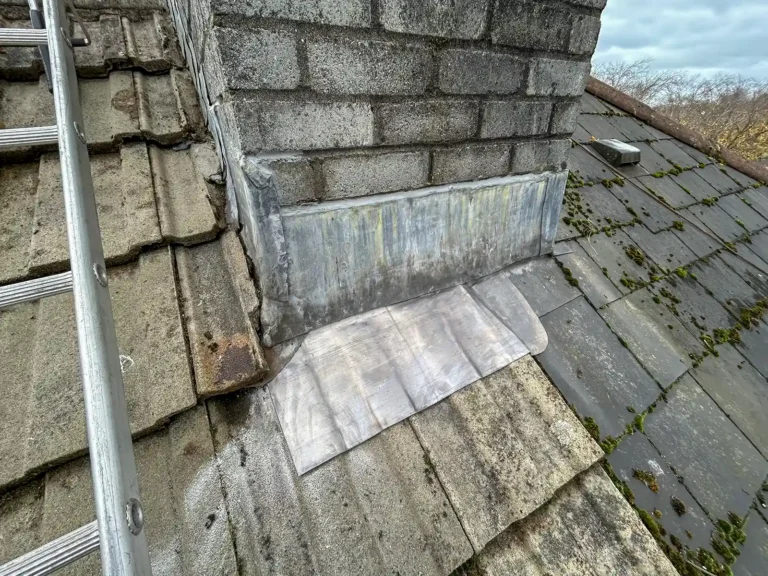
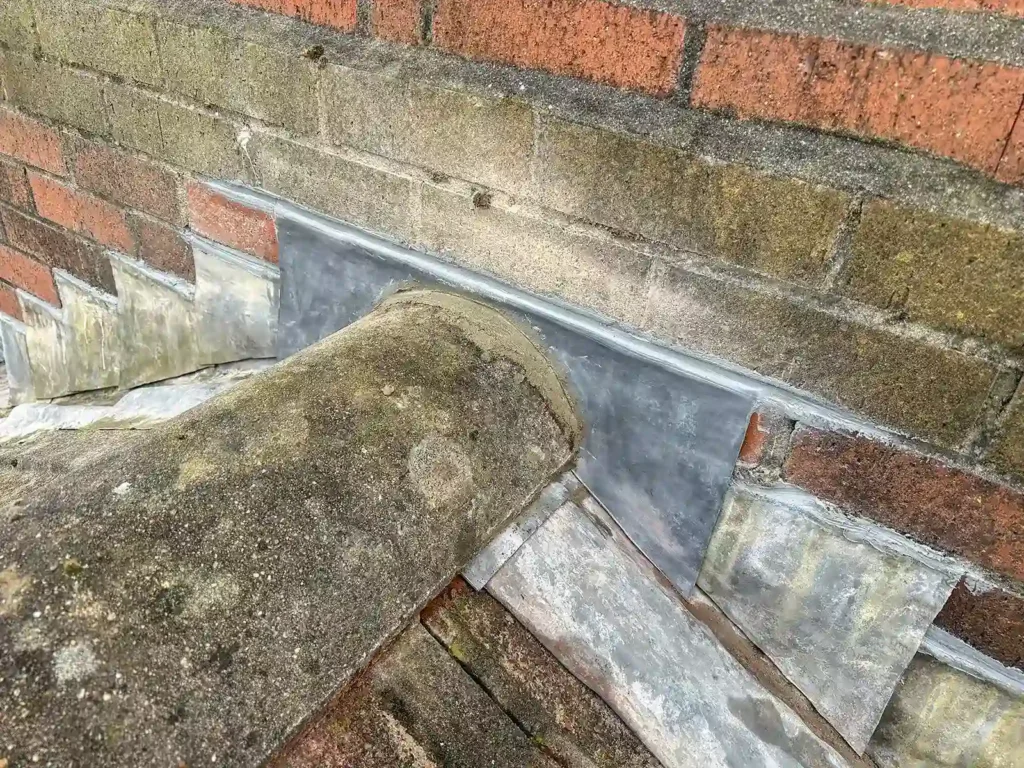
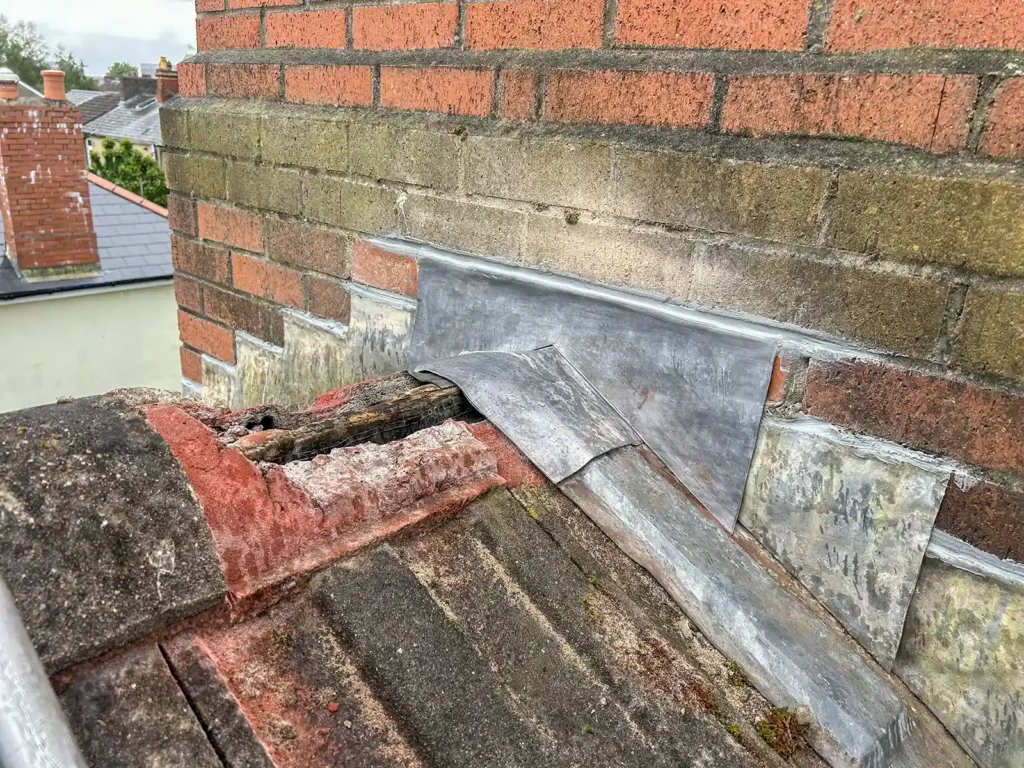
1. Failed or lifted lead flashing
Where the roof meets a chimney or wall, lead flashing keeps the water out. When it lifts or cracks, leaks follow. The roof repair is to replace the damaged lead and repoint properly.
2. Slipped, cracked and missing tiles
Wind, frost and age loosen tiles and slates. A roof repair replaces the damaged pieces and checks the battens and fixings underneath.
3. Cracked mortar and loose ridge tiles
Mortar ridge and hip bedding can crack and fall away. The roof repair is to re-bed the tiles, or to convert to a dry ridge system.
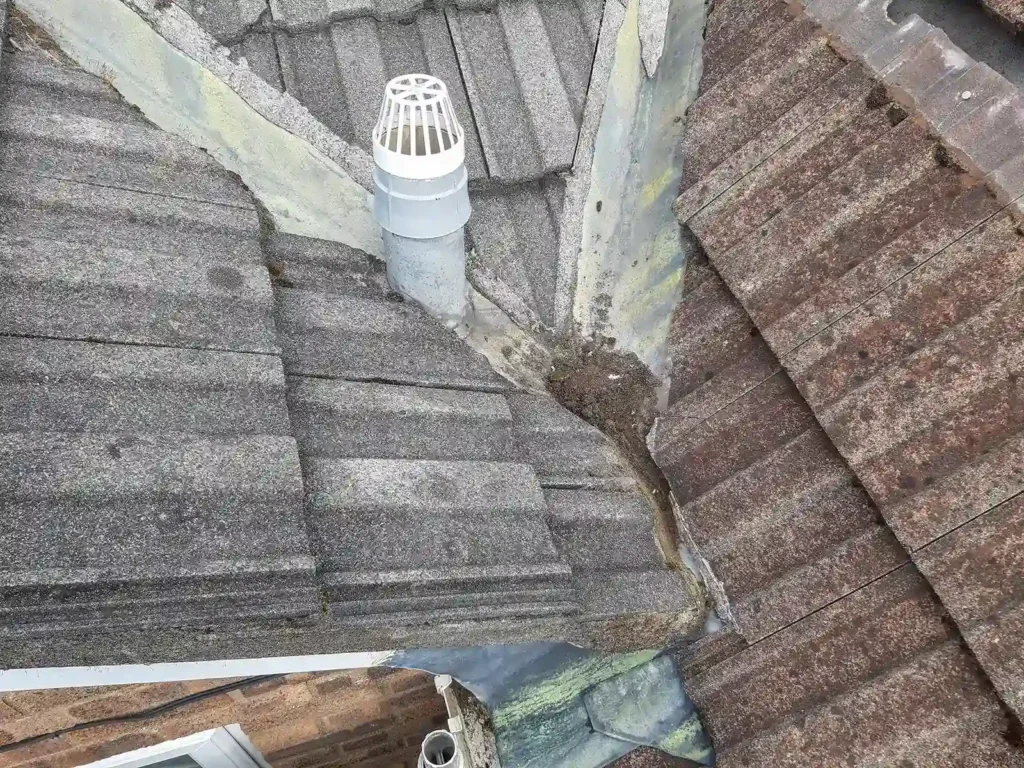
4. Failing valleys and box gutters
Valleys carry a lot of water. Cracked lead, blocked outlets and old felt cause leaks. A valley roof repair often means replacing the lead or lining.
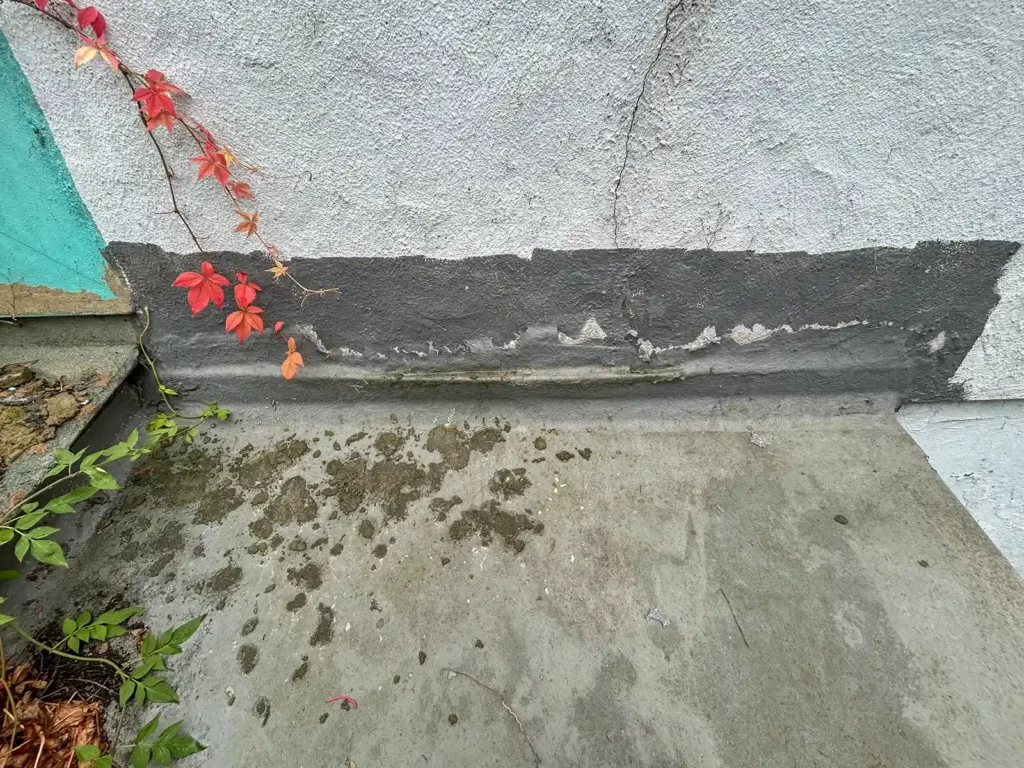
5. Flat roof leaks
Worn felt, cracked membranes and failed joints are common on extensions and garages. A flat roof repair may be a patch, or a new covering if the roof is worn out.
6. Roofline and gutter problems
Rotten fascias, sagging gutters and leaking joints let water into walls and eaves. These roof repairs are often best done together.
Why do these roof repair problems happen in South Wales?
South Wales has a mild, wet climate. Frequent rain keeps roofs damp, which encourages moss and algae, and wind driven rain finds any gap in flashings or tiles. Frost can crack damp tiles, and heavy downpours overload blocked gutters and valleys. Many homes are also older, with lead work and mortar that has been in place for decades, so these roof repair problems are common.
How to tell which roof repair problem you have
- Stain on the ceiling next to a chimney: often failed lead flashing or flaunching
- Drip in a corner after heavy rain: a slipped tile, failed valley or blocked gutter
- Stain under a flat roof: a split in the covering or failed joint
- Water running down an outside wall: overflowing or leaking gutter
- Draughts and noise in strong wind: loose ridge tiles or missing tiles
- Damp and mould in the loft: condensation from poor ventilation, not always a leak
Preventing common roof repair problems
- Clear gutters and valleys at least once a year
- Remove moss before it lifts tiles or blocks gutters
- Have flashings, ridge and pointing checked every year or two
- Keep trees trimmed back from the roof
- Fix small faults promptly, before they spread
When a roof repair becomes a roof replacement
If the same problems keep returning across the whole roof, a roof repair may only be a temporary answer. A good roofer will tell you honestly when a roof is at the end of its life, and give you both options in writing. See our guide on how to decide between repair and replacement.
7. Soil pipe and vent pipe leaks
Cracked soil vent pipes and poor flashings around them can let water in at the roof.
Each of these is a standard roof repair for an experienced roofer. See our roof repairs page, or book a free roof inspection.
Roof repair problems on older and newer roofs
The type of roof repair you need often depends on the age of the roof. Older Victorian and Edwardian roofs usually have natural slate, traditional lead flashings and mortar-bedded ridges. These tend to need lead work, pointing and slate replacement, and they reward careful, skilled repair. Post-war roofs often have concrete tiles, which can wear, flake and gather moss, and ridge bedding that has cracked over time.
Modern roofs use breathable membranes, dry ridge systems and mechanically fixed tiles. Problems here are more often caused by poor detailing, damaged flashings, or damage from storms and falling debris. Extensions and garages may have flat roofs with their own set of problems.
Whatever the age of the roof, an honest inspection should tell you what is wrong, why it happened and what a proper roof repair involves.
Common roof repair problems FAQs
What is the most common roof repair problem?
Failed or lifted flashings, slipped tiles and blocked valleys and gutters are among the most common, and all can cause leaks.
Can I fix a roof leak myself?
You can limit the damage inside, but you should not climb on the roof. A roofer should find the cause and carry out the roof repair safely.
Why does my roof leak only in heavy rain?
Small faults, such as a gap in a flashing or a slipped tile, may only let water in when rain is heavy or wind driven.
How do I know if the roof needs repair or replacement?
If the damage is limited and the rest of the roof is sound, a roof repair is usually enough. If problems are widespread, replacement may make more sense.
Do you repair roofs across South Wales?
Yes. We carry out roof repairs across Cardiff and 16 more towns in South Wales.
Never work on a roof yourself without proper safety equipment: see the HSE guidance on working at height.
Worried about your roof?
Call now to book a free roof inspection and get a fixed price in writing.