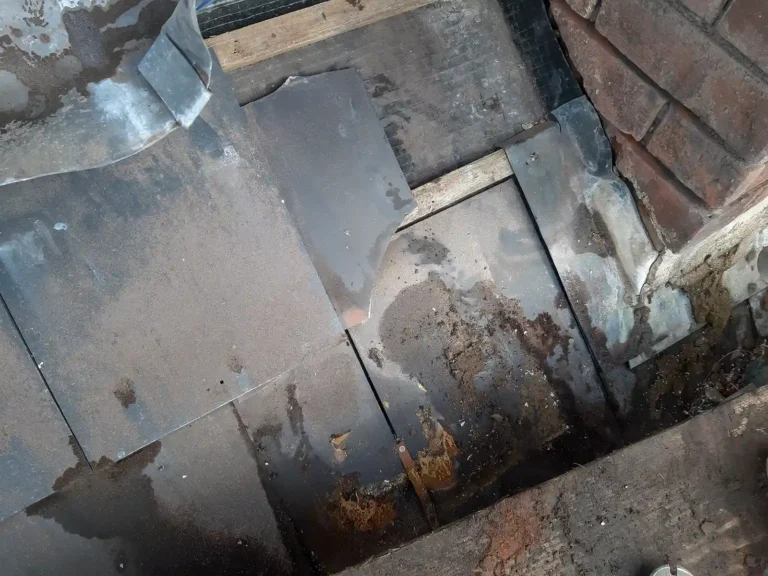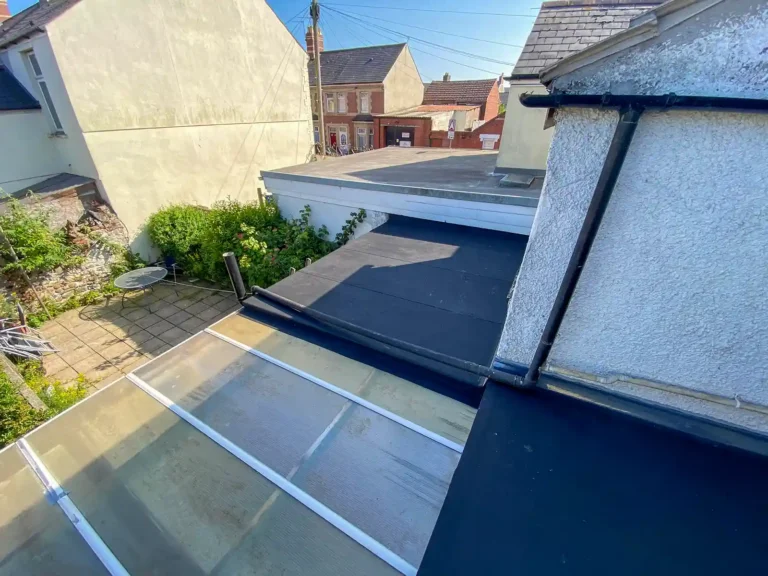
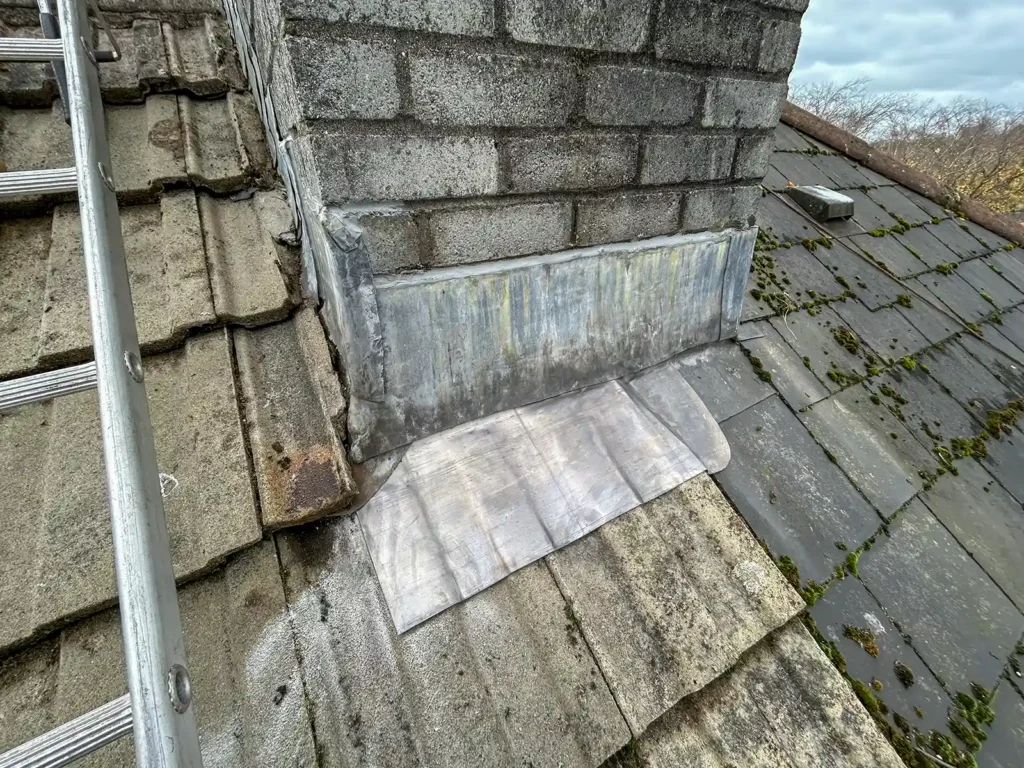
Most roofs do not leak in the middle of a tile or slate. They leak at the joins, where the roof meets a chimney, a wall, a dormer or a window. Lead flashing seals those joins, and when it fails water gets in.
What does lead flashing do?
Lead is soft enough to be shaped tightly around awkward details and tough enough to last for decades. Flashings are fitted in pieces, such as aprons, step flashings, soakers and back gutters, which direct water over the covering and away from the joint.
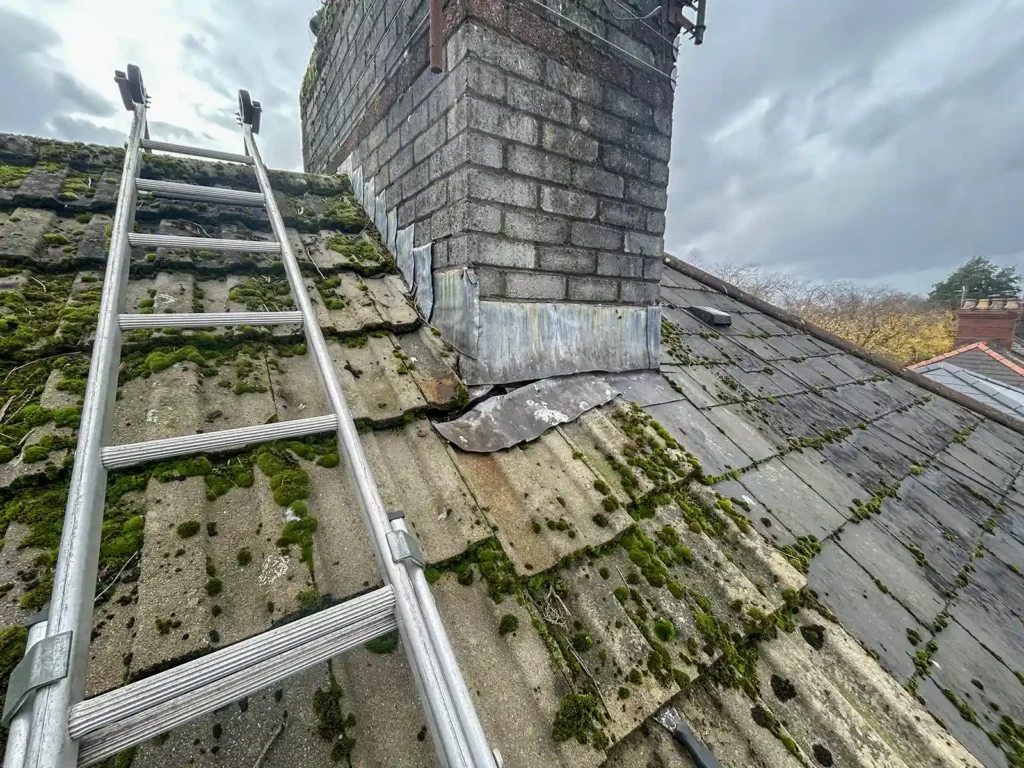
Why does it fail?
- Lifting from wind and movement
- Cracking from age and repeated expansion
- Poor original fitting, or sealants used instead of proper lead work
- Failed pointing where the flashing is tucked into the brickwork
- Damage from birds, moss or ladders
Signs to look for
Damp stains on the ceiling or chimney breast, flashing that is lifting or has gaps, and mortar or sealant smeared along the edge are all clues. From the ground, binoculars can show a lot, but a roofer should check close up.
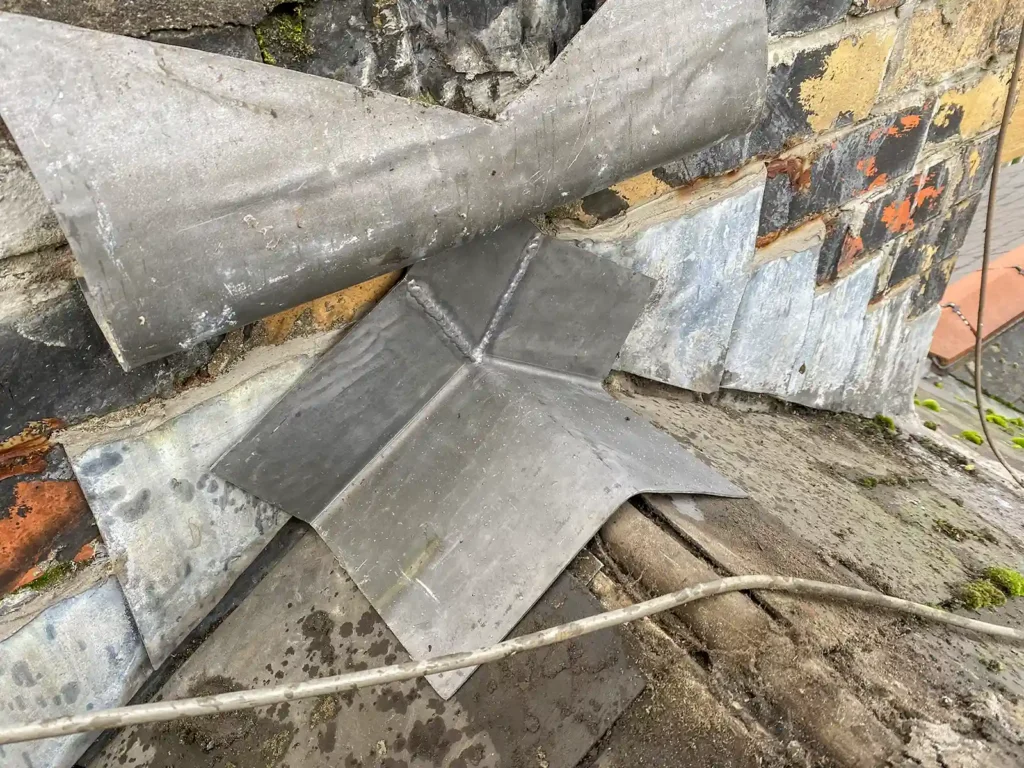
Types of lead flashing
- Apron flashing at the base of a chimney
- Step flashing along a sloping wall or chimney side
- Soakers that sit under slates and tiles at a junction
- Back gutters behind a chimney to carry water around it
- Valley and abutment flashings where roof slopes meet walls
Each type has a particular job, and fitting them correctly takes skill. Lead is also supplied in different thicknesses for different uses, so the right lead needs to be chosen for the detail.
Why sealant is not a repair
Mastic and sealant are sometimes smeared along a flashing to stop a leak. This might work for a short time, but sealant cracks and shrinks, and it hides the real problem. A proper repair renews the lead and the way it is fixed and pointed, so the detail is watertight for years.
What can shorten the life of lead
- Poor fitting, with lead stretched or not allowed to move
- Insufficient fixings or failed pointing
- Contact with certain materials or cement mortar
- Birds, foot traffic and ladders damaging the lead
- Wind lifting loose edges
Caring for lead flashing
Regular roof inspections catch early signs of lifting or cracking before water gets in. Keep gutters and valleys clear, avoid walking on lead, and have loose lead re-fixed promptly. Well fitted lead can last for decades.
A proper repair
A proper repair replaces the damaged flashing and repoints where needed, rather than covering it with a sealant. Lead work needs skill, and it is one of the main reasons to use an experienced roofer. See our roof repairs page for more.
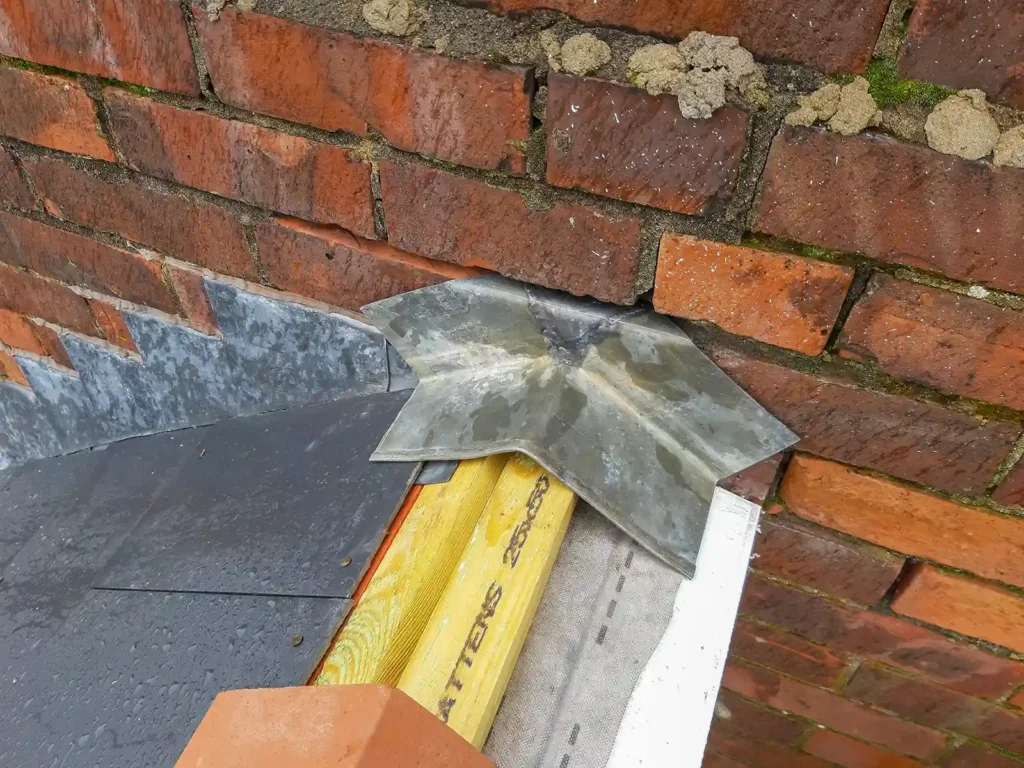
When to replace rather than repair lead
If the lead is thin, cracked in many places, or has been patched several times, replacement is usually the better answer. New lead, properly fitted with new fixings and pointing, gives a long term solution rather than a short term patch.
Lead flashing and chimneys
Chimneys are the most common place for lead flashing problems, because they have several faces and are exposed to weather on all sides. A typical chimney has an apron at the front, step flashings on the sides and a back gutter behind it. A fault in any one of these can let water in.
Questions to ask about lead work
- Is the lead to be replaced or repaired, and why?
- What thickness (code) of lead will be used?
- Will the brickwork be repointed where the lead is fixed?
- What guarantee comes with the lead work?
Signs of poor lead work
Not all lead work is done well. Warning signs include thick lines of sealant instead of properly dressed lead, lead that is stretched or torn, flashing without proper fixings, and lead that has been pushed into a mortar joint without being wedged and pointed. If you are not sure, ask a roofer to check it and show you.
Lead and the weather
Lead expands and contracts as it warms and cools, so it needs to be fitted in sections of the right size with room to move. Long, unbroken runs can crack. That is why the design of a lead detail, and not only the material, decides how long it lasts.
Lead flashing FAQs
What is lead flashing?
It is a sheet of lead shaped to seal the joints where a roof meets a chimney, wall or window, so water runs away from the join.
How do I know if lead flashing has failed?
Look for lifting or cracked lead, gaps, smeared sealant, and damp stains on ceilings near chimneys and walls.
Can lead flashing be repaired or must it be replaced?
Small faults can sometimes be repaired, but old or badly damaged lead usually needs replacing for a lasting fix.
Is sealant a good repair for flashing?
It is rarely a lasting fix. A proper repair renews the lead and the fixings and pointing.
Do you carry out lead work in Cardiff?
Yes. Lead flashing, valleys and chimney work are part of our roof repairs across Cardiff and South Wales.
Never work on a roof yourself without proper safety equipment: see the HSE guidance on working at height.
Worried about your roof?
Call now to book a free roof inspection and get a fixed price in writing.